
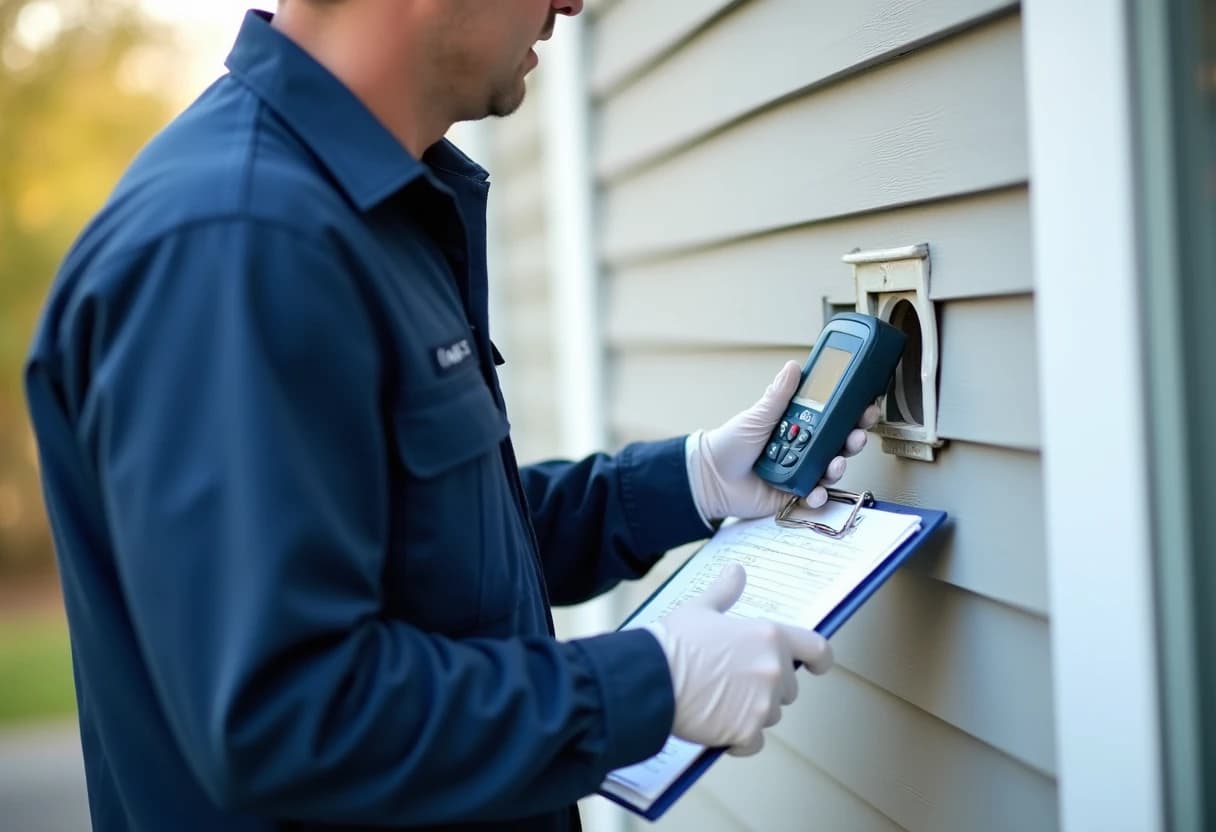
Think of a dryer vent inspection as an annual physical for the hardest-working exhaust duct in your house. In one visit, our Weston technician verifies four things: that air is actually moving at the volume a dryer requires, that the duct interior is not accumulating a dangerous lint load, that the exterior hood and damper open freely and seal properly, and that the installation follows the code rules written to prevent dryer fires — smooth metal duct, legal length, proper joints. Most inspections take under an hour. Many end with good news; the rest catch a developing hazard years before it becomes a house-fire statistic or a dead heating element.
Why Dryer Vent Inspection & Safety Check Matters for Weston Homes
Dryer fires are among the most preventable house fires in America, and the statistics are stubbornly consistent: FEMA and NFPA data attribute roughly 2,900 residential clothes dryer fires per year to U.S. homes, causing deaths, injuries and tens of millions of dollars in property loss — with lint the leading ignition source and failure to clean the leading contributing factor. What makes these fires preventable is that the hazard builds slowly and measurably. Lint accumulates in the duct, airflow drops, drying times stretch, the dryer cabinet runs hotter, and eventually a heating element or a spark meets a fuel supply that has been growing for years. An annual inspection interrupts that chain at the first link. Airflow measurement detects restriction long before it becomes dangerous; camera imaging shows exactly where lint is packing and whether the duct itself — crushed sections, separated joints, an accordion foil transition — is contributing. For less than the cost of a dinner out, you convert an invisible risk into a documented, managed one.
Buying or selling in Weston? The dryer vent is the gap in almost every home inspection. Weston's large wooded lots hold everything from 18th-century farmhouses and grand early-1900s estates to substantial new mansions replacing mid-century homes, most now running three or more zones of ducted heating and cooling. Attic air handlers, long horizontal runs and multiple systems per house are the norm, which multiplies the surface area where dust settles. General inspectors note the dryer's presence and move on; they do not camera the duct, measure the exhaust, or verify the hidden run complies with code — yet vent condition is a genuine safety and cost item, especially in older properties near Weston Town Green where laundry was retrofitted long after construction. Weston homes are big, and big houses hide neglected ductwork - it is common for us to service a system here that conditions 8,000 square feet through runs no one has inspected since construction. The town's heavy tree canopy also means high pollen and organic debris loads at outdoor intakes and dryer vent terminations each spring and fall. We provide pre-listing and pre-purchase dryer vent inspections across Middlesex County with fast written reports that slot straight into a disclosure package or an inspection-response negotiation. Sellers use them to remove doubt; buyers use them to avoid inheriting someone else's fire risk.
Our Dryer Vent Inspection & Safety Check Process in Weston
1Interview & Visual Assessment
Every inspection opens with a short conversation and a visual survey. Drying times, error codes, humidity in the laundry room and the age of the installation all steer the inspection. The technician checks the transition duct behind the dryer first — foil accordion duct and plastic flex are immediate findings, since both are recognized fire hazards.
2Airflow Measurement at the Termination
We quantify before we diagnose. An anemometer reading at the outside hood, taken while the dryer runs, measures delivered airflow against the benchmark a dryer needs to operate safely. Strong flow with a clean camera pass means a pass; weak flow tells us restriction exists and the camera's job is to find it.
3Full-Length Camera Inspection
This is the step no flashlight can replace: a camera pass of the complete exhaust run, wall cavities and ceiling sections included. You can watch live as it travels. Lint depth, joint condition, duct material transitions and any obstructions are recorded, and representative frames go into your written report as evidence for every finding.
4Termination Hood & Damper Check
We check the exit as carefully as the run. A damper that will not open steals airflow; one that will not close invites cold air, moisture and animals. We also flag code and safety issues here: mesh screens that catch lint, terminations too close to openings or grade, and hoods damaged by weather or renovation work.
5Lint-Load Assessment & Fire-Risk Scoring
We translate the inspection into a plain-English risk score. You will know approximately what percentage of the duct's cross-section remains open, where the worst accumulation sits, and how urgent intervention is. FEMA attributes roughly 2,900 dryer fires a year primarily to lint — the score tells you honestly where your vent stands relative to that risk.
6Code-Compliance Review
Many Massachusetts dryer runs predate modern code or were improvised during renovations, so this review frequently finds the root cause behind chronic lint problems: an over-length run, an accordion foil transition, a screened termination collecting lint like a filter. Identifying the violation matters because cleaning a non-compliant duct treats the symptom on a schedule; correcting it treats the cause once.
7Written Safety Report & Recommendations
The visit ends with documentation, not a verbal shrug. Your report states plainly whether the vent passed, what was found where, and what — if anything — we recommend, with flat-rate pricing for any corrective work so you can decide on your own schedule. No findings are invented to sell a cleaning; the photos speak for themselves.
Benefits of Professional Dryer Vent Inspection & Safety Check in Weston
Real-Estate & Insurance Documentation
Condo associations and landlords in Massachusetts are steadily adding dryer vent verification to their maintenance requirements after well-publicized multi-family lint fires. Our per-unit reports satisfy property managers and boards in one visit, with scheduling built for buildings — multiple units, one appointment block, individual documentation.
Hidden Code Violations Exposed
Many chronic lint problems are really installation problems: the duct violates length, material or fastening rules and will clog on schedule forever until corrected. The compliance review identifies the root cause, so you can stop paying to clean a duct that was built to fail.
No Unnecessary Cleanings
The $79 inspection frequently saves the $200 cleaning. When airflow measures strong and the camera shows light accumulation, we say so in writing and leave. Customers who used to buy blind annual cleanings routinely discover their actual interval is longer — and their total maintenance spend drops accordingly.
Protection From Moisture & Carbon Monoxide
Every load of laundry evaporates roughly a gallon of water, and all of it must exit through this one duct. Joints that separated inside a ceiling deliver that gallon into your structure instead. The camera pass finds hidden leaks that no exterior symptom would reveal until damage was done.
Fire Risk Caught Before It Matters
Lint fires do not announce themselves; they accumulate. An inspection converts that slow, invisible buildup into a number and a photograph you can act on. Homeowners who inspect annually essentially never experience a vent-related fire, because the fuel never gets the chance to reach a dangerous load.
Lower Drying Costs & Longer Appliance Life
Dryers fail early for one dominant reason: heat stress from poor exhaust. High-limit switches, thermal fuses and heating elements all die young in restricted systems. An annual inspection keeps the appliance operating within its design envelope, which routinely doubles the useful life of components that cost $150+ per repair visit.
Signs Your Weston Home Needs Dryer Vent Inspection & Safety Check
No Visible Exhaust at the Outside Hood
The outdoor hood is the one part of the system you can check yourself, and a weak or absent exhaust stream there is diagnostic. But the hood cannot tell you where the problem lives — the duct, the damper or the dryer. The anemometer and camera answer that in one visit.
You Cannot Remember the Last Service
New homeowners inherit the previous owners' laundry habits inside their duct. Unless the sellers produced a dated inspection report, the vent's condition is unknown — and unknown is exactly the wrong state for the home's most fire-prone duct. A move-in inspection resolves it for under $150.
Insurance, Condo or Sale Requirements
Listing your home this season? Handle the vent before the buyer's inspector does. A pre-listing inspection either produces a clean report for your disclosure package or surfaces a modest repair you control the pricing of — versus a finding that becomes a closing-table concession.
Recent Renovation, New Dryer or New Home
Just bought the house? Your home inspector almost certainly did not camera the dryer duct or measure its airflow — general inspections do not include it. Given that lint fires are among the most common preventable house fires, a dedicated vent inspection belongs on every new-owner checklist.
Burning or Musty Smells During Operation
Trust your nose. Scorched smells mean lint meeting heat; sour smells mean water pooling where it should not; animal odors mean something has moved into the duct or hood. Each has a distinct cause and a distinct fix, and a single camera inspection distinguishes among them definitively.
The Dryer or Laundry Room Feels Hot
A dryer cabinet that is hot to the touch, or a laundry room that turns into a sauna mid-cycle, means exhaust heat is staying in the house instead of leaving through the duct. That trapped heat is the same heat that ignites lint. It warrants a measurement promptly.
Dryer Vent Inspection & Safety Check Cost in Weston, MA
Three honest questions set your price. Where does the vent terminate — ground-level wall, second story, or roof? How long and complicated is the run — a straight 8-foot shot or 30 feet with four elbows through two floors? And is this a single home or a multi-unit building? Simple answers put you at $79; complex ones at $149; buildings get per-unit rates that drop with unit count. Two pricing notes worth knowing. First, our inspection fee is credited in full toward any cleaning we perform at the same visit, so the diagnostic never costs extra when work follows it. Second, beware of free inspections from cleaning companies — an inspection whose only revenue comes from selling you a cleaning is a sales call with a camera. Ours is priced as a standalone professional service precisely so the verdict can honestly be 'your vent is fine,' which it is roughly a third of the time.
Want the full pricing picture? See our complete Boston-area cost guide or call (617) 390-7145 for an exact flat quote for your Weston home.
Local Knowledge: Weston, Middlesex County
Every town's ductwork tells the story of its housing. Weston's large wooded lots hold everything from 18th-century farmhouses and grand early-1900s estates to substantial new mansions replacing mid-century homes, most now running three or more zones of ducted heating and cooling. Attic air handlers, long horizontal runs and multiple systems per house are the norm, which multiplies the surface area where dust settles. Weston homes are big, and big houses hide neglected ductwork - it is common for us to service a system here that conditions 8,000 square feet through runs no one has inspected since construction. The town's heavy tree canopy also means high pollen and organic debris loads at outdoor intakes and dryer vent terminations each spring and fall. We plan Weston jobs around those realities, from equipment selection to time on site, and it shows in the results. If you live near Regis College or anywhere across Weston's 02493 area, we have almost certainly cleaned a system like yours before — and we can tell you exactly what to expect before we arrive.
The Best Time of Year in Weston
Massachusetts winters stress the exhaust side of a dryer in ways most owners never see. Warm, moist exhaust meeting sub-freezing duct sections condenses, and that condensation turns dry lint into wet mats that cling and clog. Terminations ice up; damper flaps freeze shut overnight and get forced by the morning's first load; snow drifts bury low wall hoods entirely. A mid-winter inspection is often the year's most revealing one — we routinely find seasonal blockages that did not exist in September. If drying times slow every January in your house, that pattern itself is a finding worth investigating.
Why Choose Boston Air Duct Cleaners
Choosing a duct cleaner is really a trust decision — you are letting a crew work inside the system that feeds air to your family. We make that decision easy: a local West Newton company with insured, uniformed technicians, transparent flat-rate quotes, NADCA-standard equipment and methods, and photographic proof of the finished work. No door-to-door sales, no bait-and-switch coupons, no invented 'mold emergencies.' Just honest mechanical cleaning done properly the first time, backed by a written guarantee.
Serving Weston and Surrounding Communities
Beyond Weston, our crews cover the surrounding communities daily — including Waltham, Wayland, Wellesley, Lincoln, Natick, Newton. Because routes cluster geographically, booking alongside a neighboring appointment often unlocks same-day service and combined-visit savings. Wherever you are in Middlesex County, the same flat-rate pricing, insured technicians and photo-documented process applies.