
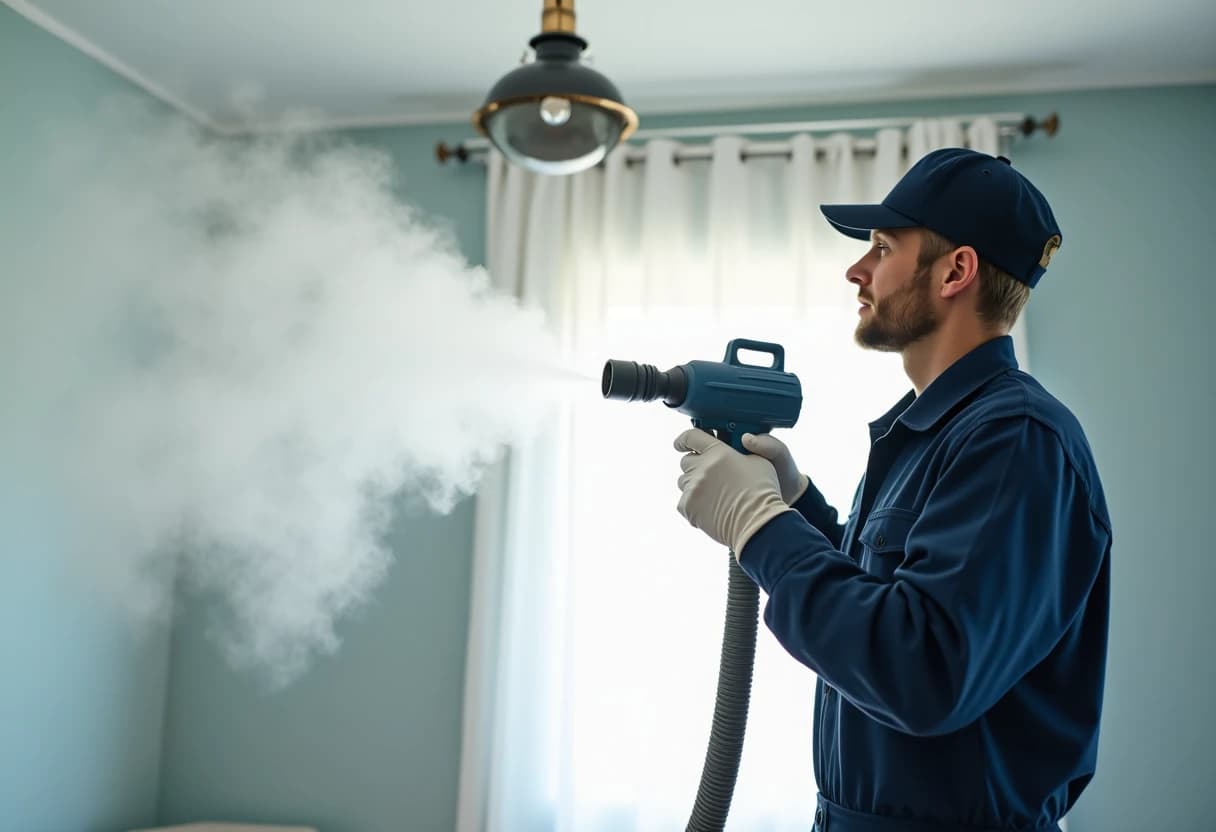
The EPA's guidance on duct treatments is specific: chemical biocides should be applied only after mechanical cleaning, and only products registered for use in HVAC systems belong in your air path. That is exactly how we sanitize ducts in Marblehead. First the system is cleaned to bare surfaces under negative pressure; then an EPA-registered antimicrobial is atomized through the supply and return network at label rates, treating the seams, joints and textures no brush can fully reach. The treatment kills odor-causing bacteria, neutralizes microbial residue and inhibits regrowth — and because it lands on clean metal rather than a dust blanket, it actually works. We will also tell you plainly when your system does not need it.
Why Air Duct Sanitizing & Deodorizing Matters for Marblehead Homes
Certain situations turn sanitizing from optional to strongly advised. After confirmed microbial growth or a mold finding, treatment of the cleaned surfaces inhibits recolonization while the moisture fix takes hold. After rodent or pest activity in the ductwork, sanitizing addresses the bacterial and viral load droppings leave behind — a genuine health matter, not merely an aesthetic one. After fire or heavy smoke exposure, deodorizing treatment neutralizes the acrid residue that otherwise off-gasses for years. After a water event, it suppresses the microbial bloom that damp ducts incubate. And at move-in, it resets a system whose history you cannot verify. In each case the logic is the same: cleaning removes what is visible, sanitizing addresses what is biological. Conversely — and we say this plainly because the industry often will not — a routinely maintained system with no odor, no moisture history and no contamination event does not need sanitizing, and the EPA does not recommend routine biocide use in ducts. We inspect first and recommend accordingly. Roughly a third of the time, our recommendation is to skip it.
We treat a steady stream of odor calls from Marblehead, from condos near Old Town to family homes out toward Marblehead Neck, and the pattern is consistent: the smell survives every surface remedy because it lives in the air system. Marblehead's Old Town holds one of the largest concentrations of pre-Revolutionary homes in America - narrow gambrels and Georgians on winding lanes - while Clifton and the Neck add Victorian summer estates and mid-century family homes. Retrofitting ductwork into these antique frames produces tight chases, flexible duct and high-velocity mini-duct systems that demand careful, gentle cleaning methods. That age of housing stock means duct film with a long biography. Because our shop is in West Newton, roughly 22 miles away, we can usually schedule Marblehead sanitizing visits within days — often bundled with cleaning in one appointment, which is both cheaper and more effective.
Our Air Duct Sanitizing & Deodorizing Process in Marblehead
1Odor Assessment & Honest Qualification
First we determine whether sanitizing will actually fix your problem. The technician traces the odor's behavior — does it arrive with airflow, vary by season, concentrate at certain registers — inspects the duct interiors and air handler, and checks for moisture. If the source is your ducts, we quote the treatment flat. If it is not, we say so and point you at the real source.
2Source-Removal Cleaning First
Step one is removing the reservoir. The odor-saturated film lining your ducts is physically extracted under negative pressure — rotary brushes and pneumatic whips strip it from every supply, return and trunk while the HEPA vacuum captures it. Most of the odor leaves the house in this step; the fogging that follows neutralizes what remains and prevents the smell from rebuilding.
3Product Selection & Preparation
We match the chemistry to the problem: an EPA-registered antimicrobial labeled for HVAC use as the base treatment, with odor-counteractant chemistry added for smoke, pet or severe musty situations. You see the product names and safety data sheets before application — never a vague 'proprietary treatment' — and we review re-entry timing, typically just a few hours, with you up front.
4Whole-System Antimicrobial Fogging
Fogging is the delivery method that makes duct sanitizing whole-system rather than spot treatment. Atomized at the micron scale, the antimicrobial behaves like the air itself, riding the airflow into every branch, riser and return the blower serves. Everywhere your air travels, the treatment travels — which is precisely why it works on odors that a hand-sprayed register never touches.
5Coil, Drain Pan & Blower Treatment
The dampest components carry the strongest biology, so the air handler wet section gets direct treatment: evaporator coil surfaces, the drain pan and its trap, and the blower wheel and housing. Musty odors disproportionately originate here — a slimy pan or biofilmed coil can perfume an entire house — and treating the ducts while skipping the equipment leaves the source in place.
6Deodorizing Pass for Stubborn Odors
Antimicrobial treatment handles biological odors, but some smells are chemical: tar and nicotine films, cooking-oil residue, fire smoke. For those, we deploy counteractants that chemically neutralize the odor compounds themselves. The distinction matters — treating a smoke house with antimicrobial alone leaves the tar film broadcasting — and diagnosing which chemistry your odor needs is exactly what the initial assessment is for.
7System Airing, Verification & Walkthrough
The finish is verification by nose and by paper: a room-by-room airflow check confirming neutral odor at every register, before-and-after photos of the duct interiors, and a written record of products applied with their EPA registration numbers. Surfaces are dry and the home fully usable by the time we pack up in nearly all cases — we review any exceptions before we start, never after.
Benefits of Professional Air Duct Sanitizing & Deodorizing in Marblehead
Smoke Ghosts Finally Evicted
If a home smelled of cigarettes at the showing and still does after renovation, the air system is the unrenovated room. Smoke rode the returns for years, coating the full duct network with residue no one ever addresses. Treating that network is routinely the missing piece that finally clears a smoker's house — and the step savvy buyers now negotiate into the purchase.
Musty Summer Smell Broken for Good
That damp blast at AC start-up is bacteria metabolizing humid duct film — a cycle that returns every muggy stretch and worsens annually. Sanitizing removes the film and leaves treated surfaces the biology cannot recolonize, so the next humid week produces silence from the registers. For many Massachusetts households this is the first summer without the smell in a decade.
Small Add-On Cost, Outsized Payoff
Bundled with duct cleaning, sanitizing adds roughly $75 to $200 to the visit — the system is already sealed, accessed and under negative pressure, so you pay for chemistry and application time, not a second mobilization. Against the hundreds homeowners spend annually on masking products that fix nothing, the one-time source treatment is the plainly economical choice.
Microbial Load Reduced System-Wide
After specific contamination events — pest activity in the ducts, confirmed mold, water intrusion — this benefit becomes the headline: droppings, spores and bloom residue carry genuine pathogen and allergen loads, and mechanical cleaning alone does not neutralize them. The EPA-registered treatment does, which is why sanitizing moves from optional to advised the moment contamination history enters the picture.
Odors Neutralized at the Source, Not Masked
Homeowners who have fought a duct-borne smell describe the same arc: sprays, candles, filters, ozone gadgets, shampooed carpets — hundreds of dollars of masking, months of frustration, smell intact. Source treatment ends the arc in one visit because it is aimed at the right target. The register air itself comes out neutral, so the rooms finally stay that way.
A True Reset for Newly Purchased Homes
You inspected the roof, the furnace and the foundation before buying; the air system's biological history was invisible on every report. A move-in sanitizing closes that gap, decontaminating the one system that touches every room before your family settles in. Scheduled between closing and move-in, it is the cheapest and easiest it will ever be — empty house, open access, one afternoon.
Signs Your Marblehead Home Needs Air Duct Sanitizing & Deodorizing
Smoke History in the Home
The classic frustration: a fully renovated home that still exhales cigarettes on the first hot day. The renovation never entered the ductwork, where smoke residue coats every run the returns fed for years. If your renovation checklist did not include the air system, the smell has a protected reservoir — and an easy explanation for its persistence.
After Pests, Mold or Water in the System
Post-mold-remediation, treating the cleaned duct surfaces inhibits recolonization while moisture corrections take effect — standard best practice, and typically specified in remediation protocols. If your home had mold work done and the ducts were cleaned but never treated, that gap is worth closing before the next humid season tests it.
Guests Notice a Smell You No Longer Can
The cruelest version arrives during a home sale: buyers and agents smell in thirty seconds what you have not smelled in years, and it costs you at the negotiating table either way. Pre-listing duct sanitizing addresses the odor you cannot perceive at its distribution point — which is why experienced listing agents put it on the prep checklist.
You Just Bought the Home
Even a home that smells fine at purchase benefits from the reset when history is unknown: odor thresholds are personal, previous owners' normal may not be yours, and the first heating season has a way of releasing what summer showings concealed. Buyers who sanitize at move-in never have to wonder what October's first furnace cycle will announce.
Odors Return No Matter How Much You Clean
If deep-cleaning the house buys only a day or two before the smell creeps back, the source is upstream of everything you cleaned — in the air system, re-scenting the rooms on every cycle. That resupply pattern is the signature of duct-borne odor, and it means the fix is in the ducts, not in another weekend of scrubbing.
Musty Blast When the Heat or AC Starts
Cycle-start odor means the smell is being generated inside the system and flushed out with the first air movement. Intermittent mustiness responds fully to sanitizing; a strong, constant or worsening version can indicate active mold colonization, which our inspection distinguishes — a difference that matters, since mold removal involves containment protocols and different pricing.
Air Duct Sanitizing & Deodorizing Cost in Marblehead, MA
Compare the cost against what duct-borne odors actually extract from households. Masking products — candles, plug-ins, sprays — run $200 to $500 annually for a committed household and resolve nothing. Consumer ozone generators cost $100 to $400, carry EPA warnings, and leave the odor source intact. Carpet replacement motivated by a smell that turns out to be duct-borne runs $2,000 to $6,000 and fails on arrival, since the system re-scents new fibers within months. Repainting for smoke odor without treating the ducts: $3,000 to $8,000, same outcome. Against that landscape, $250 to $500 for professional source treatment — or $75 to $200 added to a cleaning you may need anyway — is not the premium option; it is the only option priced against the actual problem. For sellers the math sharpens further: listing agents consistently report that odor-flagged homes show worse and negotiate weaker, with concessions that dwarf the treatment cost by an order of magnitude. Fresh-smelling is the cheapest staging money can buy.
Want the full pricing picture? See our complete Boston-area cost guide or call (617) 390-7145 for an exact flat quote for your Marblehead home.
Local Knowledge: Marblehead, Essex County
Every town's ductwork tells the story of its housing. Marblehead's Old Town holds one of the largest concentrations of pre-Revolutionary homes in America - narrow gambrels and Georgians on winding lanes - while Clifton and the Neck add Victorian summer estates and mid-century family homes. Retrofitting ductwork into these antique frames produces tight chases, flexible duct and high-velocity mini-duct systems that demand careful, gentle cleaning methods. Surrounded by harbor on one side and open Atlantic on the other, Marblehead homes battle salt-laden humidity year-round, and we routinely replace seized, corroded vent hoods on homes near the causeway. In Old Town's centuries-old basements, stone foundations wick moisture that finds its way into any duct run passing through. We plan Marblehead jobs around those realities, from equipment selection to time on site, and it shows in the results. If you live near Old Town or anywhere across Marblehead's 01945 area, we have almost certainly cleaned a system like yours before — and we can tell you exactly what to expect before we arrive.
The Best Time of Year in Marblehead
Summer humidity is the engine of Greater Boston's duct-odor cycle. When dew points camp in the high 60s, moisture condenses on every cool surface in the air path — coil, pan, basement trunk lines — and the organic film absorbs it like a sponge. Bacteria respond within days, and their metabolism is the musty smell that arrives with every cooling cycle from July onward. Coastal and near-coastal homes get an extended version, with marine air keeping duct-adjacent spaces damp well into fall. Sanitizing breaks the biological half of the cycle; pairing it with the moisture-side fixes — insulating sweating runs, managing basement humidity, keeping condensate lines clear — breaks the whole loop, and the pairing is what turns a yearly complaint into a solved problem.
Why Choose Boston Air Duct Cleaners
Choosing a duct cleaner is really a trust decision — you are letting a crew work inside the system that feeds air to your family. We make that decision easy: a local West Newton company with insured, uniformed technicians, transparent flat-rate quotes, NADCA-standard equipment and methods, and photographic proof of the finished work. No door-to-door sales, no bait-and-switch coupons, no invented 'mold emergencies.' Just honest mechanical cleaning done properly the first time, backed by a written guarantee.
Serving Marblehead and Surrounding Communities
Marblehead sits in the heart of our service area, and neighboring Swampscott, Salem, Lynn, Peabody, Nahant, Beverly appointments share the same routes. That density is why our response times in this part of Essex County are among our fastest — and why you will see our trucks in the area week after week.