
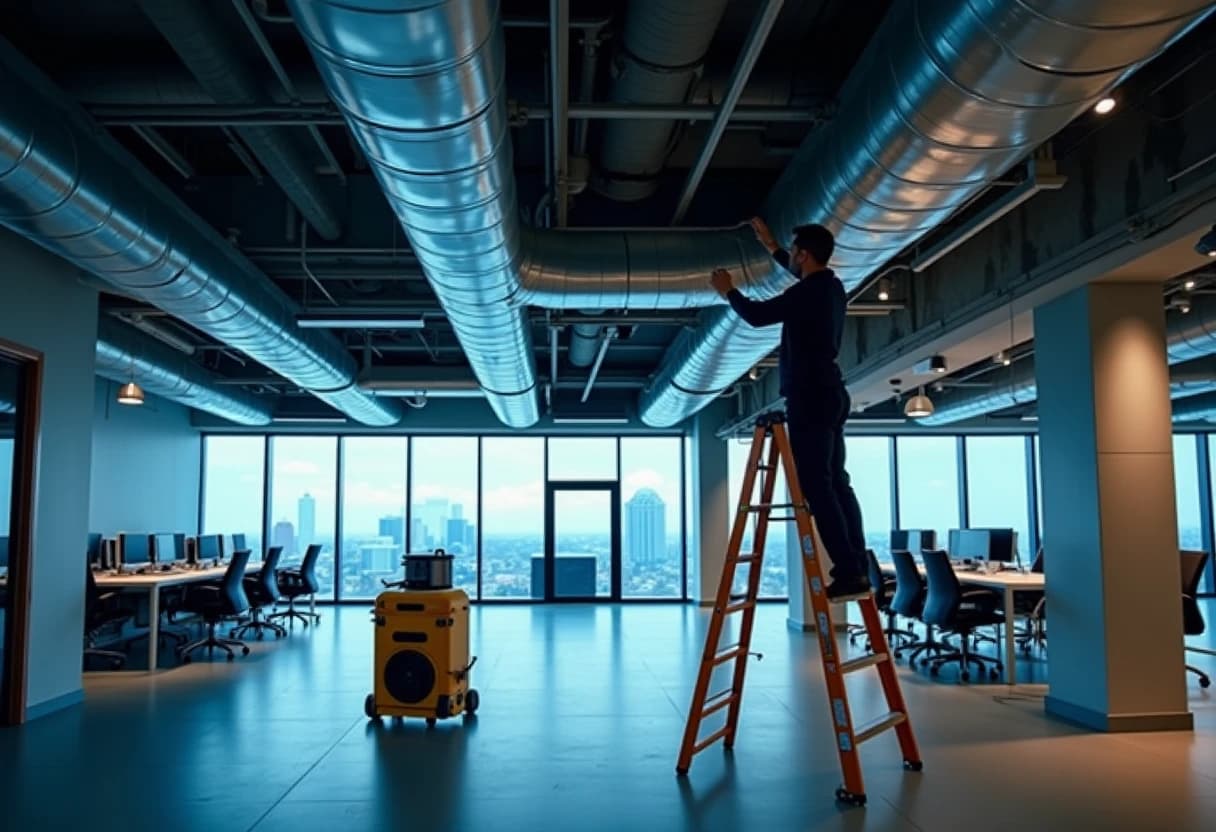
When employees complain about stuffy air, tenants file IAQ tickets, or customers notice dust streaming from ceiling diffusers, the ductwork is usually the culprit — and in commercial buildings it is measured in thousands of square feet of hidden sheet metal. Boston Air Duct Cleaners provides full source-removal duct cleaning for commercial properties in Dorchester: supply and return trunks, branch runs, VAV and fan-powered boxes, rooftop unit interiors, and the diffusers and grilles your occupants actually see. Our crews are experienced with roof access, ceiling plenum returns, and the long horizontal trunk runs typical of office and retail construction. Every project includes pre- and post-cleaning photo documentation, after-hours or phased scheduling, and a certificate of insurance issued to your property before work begins.
Why Commercial Air Duct Cleaning Matters for Dorchester Homes
Certain commercial situations make duct cleaning non-negotiable. After tenant fit-outs and renovations, drywall and concrete dust saturates the duct network and ceiling plenum; occupying the space without cleaning means months of construction particulate raining onto desks and merchandise. After fire or smoke events — even minor ones — soot embeds in duct dust and re-releases odor indefinitely, and remediation scopes routinely require documented duct cleaning. After water intrusion, roof leaks or humidification failures, damp duct interiors become microbial growth sites within days, and the EPA's guidance is explicit that visibly contaminated ducts serving occupied spaces should be professionally cleaned. Ownership transitions matter too: buyers inherit the previous owner's deferred maintenance, and a pre-purchase duct inspection is one of the cheapest due-diligence items available. Finally, some tenants simply require it — medical uses, labs, food production and childcare leases often carry IAQ maintenance clauses. In each case, the combination of proper source-removal cleaning and a formal completion report satisfies the requirement and closes the file.
Dorchester businesses call us for three commercial scenarios more than any other: post-fit-out cleanings after renovation dust invades the ductwork, odor and stale-air complaints in older buildings, and documentation requirements from insurers or medical tenants. Dorchester is Boston's largest neighborhood and the heartland of the classic New England triple-decker, with block after block of 1890s-1920s three-family homes joined by Victorian singles around Ashmont Hill and Melville Park and brick mill conversions at Lower Mills. Triple-deckers were built for stove and radiator heat, so their forced-air systems are almost always retrofits - basement furnaces feeding first floors easily while upper units depend on long vertical chases that accumulate dust at every joint. Three stacked households also mean three dryers, often venting through improvised routes. Nobody who works on Dorchester triple-deckers is surprised by what comes out of the ducts: a century of coal soot, plaster dust and lint layered in shared chases. We also see a steady stream of dryer vent hazards here, from basement dryers vented into crawlspaces to third-floor units pushing lint through thirty feet of pipe. The Baker Chocolate Factory condos at Lower Mills bring their own mill-conversion duct quirks. We bring the full commercial setup to every Dorchester project — portable and truck-mounted HEPA negative-air machines, rotary brush and air-whip agitation, coil cleaning capability for rooftop and interior units — because commercial trunk lines and VAV systems demand more than residential equipment can deliver. Every project ends with a written completion report, and most are executed entirely outside your business hours.
Our Commercial Air Duct Cleaning Process in Dorchester
1Site Walk, System Mapping & Flat Quote
Commercial projects start with a site walk or a review of your mechanical drawings. We identify every air handler and rooftop unit, trace the zones they serve, count diffusers and returns, note access constraints — ceiling heights, tenant hours, roof access — and inspect representative duct sections with a camera. You receive a flat, written quote with a proposed schedule before anything is booked.
2Certificates of Insurance & Scheduling Around Your Operations
Commercial work runs on paperwork and timing, and we treat both as part of the service. COIs naming your entity and landlord go out in advance; technicians carry ID and follow your building's access and alarm protocols. Scheduling is genuinely flexible — most of our commercial cleaning happens between close and open, and phased projects are sequenced so each area is finished, cleaned and back in service before occupants return.
3Containment & Protection of Finished Spaces
Retail merchandise, exam rooms, server closets, commercial kitchens — commercial spaces contain things that must not get dusty, and our protection plan is written into every project scope. Sensitive areas are draped or excluded and sequenced appropriately, negative pressure ensures loosened debris travels into HEPA collection rather than the space, and each night's work area is inspected and restored before the crew leaves.
4Negative Pressure on Each Zone
Zone by zone, the duct network becomes a controlled vacuum circuit. Our negative-air machines pull thousands of cubic feet per minute through HEPA filtration, maintaining continuous negative pressure for the entire agitation phase. On multi-unit buildings we isolate and clean one system at a time, which keeps containment tight and lets partially occupied buildings continue operating around the work.
5Mechanical Agitation of Trunks, Branches & Terminal Units
Commercial duct construction varies — rigid rectangular mains, spiral rounds, duct board, flex runs to diffusers — and each takes the right tool: rotary brushes for metal, gentler whip systems for duct board and flex, hand tools inside boxes and plenums. We work from the terminal ends toward the collection points so debris always moves toward the vacuum, then clean the mains themselves last.
6Air Handler, Rooftop Unit & Coil Cleaning
A clean duct system fed by a dirty air handler recontaminates in months, so units are part of every complete scope. We open each RTU or interior handler and detail the components the airstream touches: blower wheel, housing interior, plenum sections and accessible panels. Coil condition is documented with photos; where fouling is significant we quote in-place coil cleaning honestly, using appropriate coil-safe methods.
7Verification, Restoration & Completion Report
The last step is a walkthrough with your facilities contact or property manager: systems running, airflow verified at representative diffusers, documentation reviewed page by page. Everything we observed inside your system goes in writing, including items outside our scope that deserve your HVAC contractor's attention. We then log your property for the maintenance interval you choose, so recurring cleanings arrive as calendar items, not emergencies.
Benefits of Professional Commercial Air Duct Cleaning in Dorchester
Documentation for Insurance, Leases & Compliance
For medical, dental, childcare and food-service tenants, documented HVAC hygiene is part of operating credibly — inspectors notice dusty diffusers, and patients and parents notice them sooner. Our reports give these businesses a dated, photographic answer, and give their landlords a template for building-wide maintenance that keeps every tenancy covered.
Fewer IAQ Complaints, Happier Tenants & Staff
For employers, air quality is a retention and productivity issue — workplace studies consistently link ventilation quality to cognitive performance and absenteeism. For landlords, it is a lease-renewal issue. Removing years of accumulated contamination from the system every occupant shares is one of the few facility investments both groups notice within the first week.
Lower Energy Costs Across Long Operating Hours
Static pressure is a tax on every fan in your building. Dust on blower blades, mats on coil faces and debris in trunk lines all force motors to work harder for less delivered air. Removing that resistance shortens run times, reduces demand peaks, and eases strain on compressors and motors — savings that recur every month the building operates.
A Visibly Cleaner, Fresher-Smelling Space
Dust-streaked diffusers and gray-ringed ceiling tiles quietly undermine every impression your space makes — customers, patients and job candidates all register them. Cleaning the system and its visible terminals removes both the staining source and the stains, and the persistent stale-building odor that clings to occupied commercial space typically leaves with the duct dust that harbored it.
Zero Disruption to Business Operations
We coordinate with facilities teams, security desks and alarm companies as a matter of routine — after-hours access protocols, escort requirements and keyholder procedures are all handled in pre-project planning. Crews arrive on schedule, work the agreed window, and leave documentation of each shift, so managing the project costs you almost nothing in attention.
Extended Rooftop Unit & Equipment Life
Every hour a fan motor fights choked airflow shortens its life, and commercial motors log thousands of hours a year. Source-removal cleaning takes the strain off the entire mechanical chain — motors, bearings, belts, compressors — which is why HVAC contractors themselves routinely refer their commercial clients to us before recommending equipment replacement.
Signs Your Dorchester Home Needs Commercial Air Duct Cleaning
No Service History Anyone Can Find
NADCA guidance calls for periodic inspection of commercial air systems, with cleaning as conditions warrant — and in Greater Boston's older commercial stock, conditions almost always warrant. Starting a documented maintenance cycle now costs a site walk; explaining a decade of missing records to an insurer or a tenant's counsel later costs considerably more.
Dust Streaking on Diffusers, Grilles & Ceiling Tiles
Gray streaks fanning out from supply diffusers and dark rings on surrounding ceiling tiles are the system's contamination made visible: dust-laden supply air depositing its cargo at the exit. Wiping the diffusers treats the symptom for a week; the trunk and branch surfaces upstream hold the resupply until they are mechanically cleaned.
Rising Energy Bills or Weak Airflow in Certain Zones
Before your HVAC contractor quotes a rebalancing or an equipment upgrade, verify the air path is clean. We regularly find the 'undersized unit' serving a chronically uncomfortable zone is actually a properly sized unit breathing through a decade of accumulation. The cleaning costs a fraction of the equipment change it prevents.
Tenant or Employee Air Quality Complaints
IAQ tickets that keep reopening are expensive in management time and tenant goodwill. Before commissioning air-quality testing or consultant studies, look inside the ducts — in older commercial buildings, visible accumulation is the overwhelmingly common finding, and source-removal cleaning is the direct, documentable fix.
Water Intrusion, Mold Findings or Pest Evidence
Roof leaks, burst pipes and humidification failures routinely wet commercial ductwork, and damp duct dust becomes a microbial growth site within about 48 hours. Any water event near air-handling equipment warrants a duct inspection now — EPA guidance is explicit that visibly contaminated ducts serving occupied space should be professionally cleaned.
Recent Fit-Out, Renovation or Construction
If your building has had any recent renovation — your own or a neighboring tenancy sharing the same air handler — assume the ductwork participated. Shared systems distribute one suite's construction dust to every suite downstream. A camera inspection confirms it in minutes, and cleaning before complaints start is far cheaper than after.
Commercial Air Duct Cleaning Cost in Dorchester, MA
Why does the per-square-foot rate vary from $0.15 to $0.50? Density and difficulty. A modern open-plan office with exposed spiral duct cleans efficiently and prices near the bottom of the range. A medical suite with many small rooms, dense branch runs and infection-control protocols prices higher per foot. Restaurants add grease-influenced dust and overnight-only access; older buildings add long trunk runs, missing access panels (which NADCA-standard work requires us to install properly) and decades of accumulation requiring repeat agitation passes. Add-ons are quoted separately and honestly: evaporator or RTU coil cleaning typically $250–$600 per unit, EPA-registered sanitizing treatment $150–$500 depending on system size, and duct repairs always priced for approval before work. Nothing is 'discovered' on site and added to your invoice without a signed change.
Want the full pricing picture? See our complete Boston-area cost guide or call (617) 390-7145 for an exact flat quote for your Dorchester home.
Local Knowledge: Dorchester, Suffolk County
Every town's ductwork tells the story of its housing. Dorchester is Boston's largest neighborhood and the heartland of the classic New England triple-decker, with block after block of 1890s-1920s three-family homes joined by Victorian singles around Ashmont Hill and Melville Park and brick mill conversions at Lower Mills. Triple-deckers were built for stove and radiator heat, so their forced-air systems are almost always retrofits - basement furnaces feeding first floors easily while upper units depend on long vertical chases that accumulate dust at every joint. Three stacked households also mean three dryers, often venting through improvised routes. Nobody who works on Dorchester triple-deckers is surprised by what comes out of the ducts: a century of coal soot, plaster dust and lint layered in shared chases. We also see a steady stream of dryer vent hazards here, from basement dryers vented into crawlspaces to third-floor units pushing lint through thirty feet of pipe. The Baker Chocolate Factory condos at Lower Mills bring their own mill-conversion duct quirks. We plan Dorchester jobs around those realities, from equipment selection to time on site, and it shows in the results. If you live near Dorchester Avenue or anywhere across Dorchester's 02122 area, we have almost certainly cleaned a system like yours before — and we can tell you exactly what to expect before we arrive.
The Best Time of Year in Dorchester
Winter is when commercial IAQ complaints peak in Greater Boston, and the mechanism is simple: buildings close up tight, ventilation air is minimized against heating costs, and occupants spend the darkest months breathing recirculated air that passes through the duct system dozens of times a day. Whatever the ducts hold — dust, fibers, allergens, odor-saturated film — winter concentrates it. HR inboxes and property management ticket queues both show the January-February spike. A system cleaned before the closed-window months delivers its benefit exactly when occupants need it most, which is why our commercial calendar fills from the fall backward and why recurring clients anchor their intervals to early autumn.
Why Choose Boston Air Duct Cleaners
Boston Air Duct Cleaners is a local, owner-operated company based at 1121 Washington St in West Newton — not a national franchise dispatching subcontractors. Every crew is our own: background-checked, factory-trained on commercial negative-pressure equipment, and fully insured. We quote flat prices before work begins, document every job with before-and-after photos, and follow NADCA-standard source-removal methods on every system we touch. That is why so much of our work comes from repeat customers, property managers and word-of-mouth referrals across Suffolk County.
Serving Dorchester and Surrounding Communities
Dorchester sits in the heart of our service area, and neighboring South Boston, Roxbury, Milton, Quincy, Jamaica Plain, Boston appointments share the same routes. That density is why our response times in this part of Suffolk County are among our fastest — and why you will see our trucks in the area week after week.