
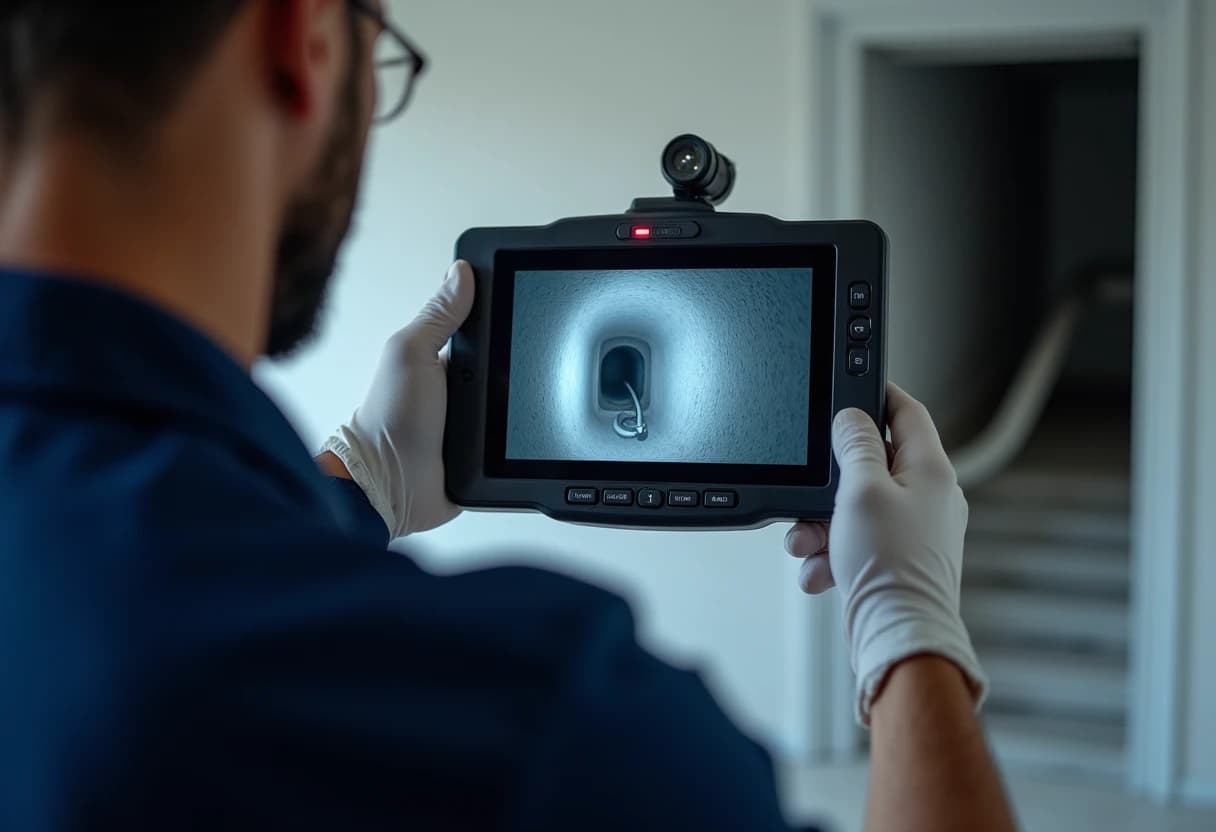
An air duct camera inspection answers questions no filter change or register glance can: How much accumulation is really in there? Is that smell mold, pest activity, or just old dust? Why does one bedroom never get warm? Our Dorchester inspections put a camera through the hidden network — supplies, returns, trunks — and frequently find what nobody suspected: branch ducts disconnected inside walls, crushed flex starving a room, gaps leaking conditioned air into joist bays, rodent evidence, moisture staining. You receive the recorded imagery, a written condition summary, and an honest recommendation. At $99 to $249, it is the cheapest diagnostic your HVAC system can get — and the fee credits toward cleaning or repair if either is actually needed.
Why Air Duct Camera Inspection Matters for Dorchester Homes
Finally, inspection-first is your defense against this industry's worst habits. The FTC and Better Business Bureau have warned for years about duct-cleaning bait pricing: the $99 whole-house coupon that becomes a $600 invoice through on-site 'discoveries' — usually a flashlight photo of alleged mold, sometimes not even from your house. The scam works because the homeowner cannot see into their own ducts and must accept or reject a claim blind, under time pressure, with the crew standing in the kitchen. Recorded camera inspection dismantles the entire mechanism. Our findings come as footage of your actual ductwork, reviewable at your pace, second-opinion-able by anyone; mold-like staining is documented, not dramatized, and we will tell you plainly when a suspect patch is ordinary dust; and because the inspection is a priced service rather than a free sales visit, the economics do not require us to find anything. Roughly half of our inspections conclude with 'you do not need a cleaning yet' — a sentence that costs us short-term revenue and earns us the referrals that built this company.
Buying near Fields Corner? Your home inspector will check that the furnace fires — not what the sellers' pets, projects and mice left inside forty feet of hidden ductwork. Dorchester is Boston's largest neighborhood and the heartland of the classic New England triple-decker, with block after block of 1890s-1920s three-family homes joined by Victorian singles around Ashmont Hill and Melville Park and brick mill conversions at Lower Mills. Triple-deckers were built for stove and radiator heat, so their forced-air systems are almost always retrofits - basement furnaces feeding first floors easily while upper units depend on long vertical chases that accumulate dust at every joint. Three stacked households also mean three dryers, often venting through improvised routes. That history transfers to you at closing unless you look first. Nobody who works on Dorchester triple-deckers is surprised by what comes out of the ducts: a century of coal soot, plaster dust and lint layered in shared chases. We also see a steady stream of dryer vent hazards here, from basement dryers vented into crawlspaces to third-floor units pushing lint through thirty feet of pipe. The Baker Chocolate Factory condos at Lower Mills bring their own mill-conversion duct quirks. Our pre-purchase duct inspections serve Dorchester buyers inside tight inspection windows: same-day recorded imagery, a written condition summary formatted for agents and attorneys, and findings — heavy contamination, disconnections, moisture, pest evidence — that regularly become negotiating credits worth many times the $99 to $249 fee. Close, book a cleaning, and the inspection fee credits in full.
Our Air Duct Camera Inspection Process in Dorchester
1System Walkthrough & Access Planning
First we learn the system: furnace or air handler location, zone count, register map, and any visible portions of trunk and branch duct in the basement, attic or utility spaces. We also gather the history you know — renovations, water events, pest issues, prior cleanings — since each one tells the camera where to look hardest.
2Borescope Inspection of Branch Runs
Branch by branch, the camera shows what the registers hide: the actual depth of accumulation on the duct floor, staining patterns on walls and seams, debris types (construction dust reads differently from household dust, and pest evidence differently from both), and the condition of joints and boots. Anything notable is captured as a still for the written summary.
3Robotic Camera Inspection of Trunk Lines
Where trunk geometry allows, robotic inspection gives you the view almost no homeowner has ever had: a steady traverse of the main lines your entire system breathes through. Where geometry does not allow — older transite runs, tight panned returns — we adapt with extended borescopes and access points, and we tell you plainly which sections could and could not be imaged.
4Air Handler, Connections & Defect Check
Contamination is only half the inspection; defects are the other half. We examine the visible duct system for the failures cameras and eyes catch: disconnected or separated joints, crushed flex duct, failed tape and mastic, panned returns leaking basement air, ducts sweating or stained by past moisture, and insulation problems on runs through unconditioned space.
5Moisture, Microbial & Pest Assessment
Where footage shows staining, growth-like patches, corrosion or droppings, we slow down and document thoroughly: close imagery, locations, extent, and the moisture pathway that likely caused it. We are careful with language — visual inspection can identify conditions consistent with microbial growth, and we say when lab confirmation would be worth it rather than diagnosing from a screen.
6The Verdict: Go, No-Go, or Watch
Every inspection ends in one of three verdicts, delivered plainly. Go: contamination or conditions justify cleaning now, and we quote it flat with the inspection fee credited. No-go: the system is serviceably clean; keep the footage as your baseline and re-inspect in two to three years. Watch: borderline accumulation or a minor issue worth monitoring — with a specific re-check date, not a shrug.
7Recorded Imagery & Written Report
You keep the evidence: recorded video and still imagery from the inspection, tagged by location, plus a written summary covering accumulation levels by duct section, defects found with locations, moisture or pest findings, filter and air-handler observations, and the verdict with its reasoning. Reports are formatted to be forwarded — to spouses, agents, attorneys, landlords or other contractors.
Benefits of Professional Air Duct Camera Inspection in Dorchester
Leverage and Clarity in Home Purchases
A pre-purchase duct inspection regularly pays for itself many times over at the negotiating table: documented contamination, defects or pest evidence become credits or seller repairs, backed by imagery no one can wave away. And when the system verifies clean, you close with one less unknown — worth the fee by itself.
Early Warning on Moisture, Mold & Pests
The two-to-three-year inspection rhythm NADCA recommends is essentially a surveillance program for exactly these conditions: cheap, quick looks that catch moisture, growth and pest issues in their inexpensive phase. Households that keep the rhythm rarely meet the expensive phase at all.
The Fee Credits Toward the Fix
Pre-purchase clients use the credit most elegantly: inspect during the buying window, negotiate with the findings, close, then book the move-in cleaning with the inspection already paid off. The same $99 to $249 does three jobs — diagnostic, negotiating evidence, and deposit — which is as hard as a service fee can work.
An Honest Answer Before You Spend on Cleaning
The inspection exists to answer one question with evidence: does this system actually need cleaning? When the footage says yes, you buy the cleaning knowing it is justified and the inspection fee credits toward it. When the footage says no, $99 to $249 just saved you $350 to $700 — and bought a documented baseline besides.
Finds Defects That Cleaning Would Never Fix
Energy loss from duct leakage is one of residential HVAC's largest hidden costs — leaky systems can lose a substantial share of their conditioned air into unconditioned spaces. The inspection locates the losses precisely, with imagery, so sealing and repair work targets actual failures instead of guesswork.
Verification of Any Company's Cleaning Work
Homeowners book verification when the bargain cleaning finished suspiciously fast, when dust returned within days, or when a landlord needs proof a vendor's work occurred. Twenty minutes of camera time settles the question definitively — and when the work was done well, the footage confirms that too, which is worth knowing.
Signs Your Dorchester Home Needs Air Duct Camera Inspection
Dust, Allergies or Filter Mysteries Despite Clean Habits
Allergy management runs on source control, and you cannot control an unverified source. Imaging either confirms the ductwork as a contributor (and cleaning as a justified intervention) or rules it out (saving the cleaning fee and redirecting attention to bedding, humidity or the actual culprit). Physicians' environmental checklists work better with evidence attached.
After Renovations, Water Events or Pest Activity
Any of the big three — construction, water, pests — makes an inspection immediately worthwhile. Renovation dust infiltrates open registers by the pound; water wets duct dust into a growth medium within about 48 hours; pests leave allergenic evidence along runs traps never reach. The camera establishes what happened and what response the evidence justifies.
You're Being Quoted a Cleaning Without Anyone Looking
The classic bait pattern — cheap coupon, alarming on-site 'discovery,' quadrupled invoice — only works on homeowners who cannot see inside their own system. Recorded inspection footage is the antidote: reviewable at your pace, shareable for second opinions, and immune to flashlight theater. Get the footage before you sign anything.
It's Been Years Since Anyone Looked — or Ever
The inspect-first rhythm is what keeps duct maintenance rational: cheap recurring looks, expensive interventions only when the looks justify them. Households that keep the rhythm never buy an unnecessary cleaning and never miss a necessary one. Households that skip it are guessing in both directions — usually toward whichever ad they saw last.
You're Buying (or Selling) a Home
For buyers of older Suffolk County homes especially, duct condition is a genuine unknown with real range: some systems verify surprisingly clean, others hold decades of accumulation or hidden defects that affect the deal. At $99 to $249 with same-day turnaround, finding out is cheaper than a single month of the mortgage on the question.
Musty or Unexplained Odors From the Vents
The EPA advises against sanitizing or treating ducts blind — you should know what you are treating and why. An inspection establishes exactly that: whether staining is consistent with growth, where moisture is entering, and whether cleaning, repair, dehumidification or lab testing is the right next step. Evidence first, chemicals later, if at all.
Air Duct Camera Inspection Cost in Dorchester, MA
Air duct camera inspection in Greater Boston runs $99 to $249, with the price driven by system size and scope rather than by anything discovered. A single-system condo or compact single-family sits at the $99 to $149 end: one air handler, a modest register count, borescope runs through representative branches and accessible trunk sections. Larger homes move toward $179 to $249 as zones, air handlers and duct footage multiply — each additional system is effectively a second inspection — and robotic crawler work on long trunk lines adds setup time that the higher tier reflects. Every inspection at every tier includes the same deliverables: recorded video and stills tagged by location, a written condition summary, a plain go/no-go verdict, and a flat quote for any work the footage justifies. And the fee credits in full toward cleaning or repair booked with us, which means a justified cleaning ends up costing exactly what it would have cost had you skipped the inspection — you just bought it knowing instead of guessing.
Want the full pricing picture? See our complete Boston-area cost guide or call (617) 390-7145 for an exact flat quote for your Dorchester home.
Local Knowledge: Dorchester, Suffolk County
Serving Dorchester means knowing Dorchester. Dorchester is Boston's largest neighborhood and the heartland of the classic New England triple-decker, with block after block of 1890s-1920s three-family homes joined by Victorian singles around Ashmont Hill and Melville Park and brick mill conversions at Lower Mills. Triple-deckers were built for stove and radiator heat, so their forced-air systems are almost always retrofits - basement furnaces feeding first floors easily while upper units depend on long vertical chases that accumulate dust at every joint. Three stacked households also mean three dryers, often venting through improvised routes. Nobody who works on Dorchester triple-deckers is surprised by what comes out of the ducts: a century of coal soot, plaster dust and lint layered in shared chases. We also see a steady stream of dryer vent hazards here, from basement dryers vented into crawlspaces to third-floor units pushing lint through thirty feet of pipe. The Baker Chocolate Factory condos at Lower Mills bring their own mill-conversion duct quirks. Those conditions shape how we work here: which brush heads come off the truck, how we protect finishes in older interiors, and what we expect to find when the camera goes into a 02122 duct system. Our crews are in and around Dorchester nearly every week — often for neighbors of past customers — so scheduling is fast and our arrival windows hold.
The Best Time of Year in Dorchester
The smartest inspection dates on a Massachusetts calendar sit just before the two heavy-use seasons. A September or October camera pass tells you whether the system is fit for the five-month heating stretch when windows stay shut and the household breathes recirculated air almost exclusively — and if cleaning is warranted, there is still time to complete it before the furnace runs continuously. A late-spring inspection does the same ahead of cooling season, with a bonus: it catches the winter's accumulation and any moisture consequences of ice-dam season before summer humidity can turn damp dust into a biology project. Inspections book faster than cleanings — most homes take under an hour — so even peak-season slots stay available when full cleanings are waitlisted, which makes the camera the right first call whenever the calendar is tight.
Why Choose Boston Air Duct Cleaners
We built this company around the jobs other duct cleaners do badly: the 130-year-old Victorian with panned-joist returns, the Dorchester condo with a 60-foot dryer run to the roof, the post-renovation house full of drywall dust. Our crews see Greater Boston's hardest systems every week, and the experience shows in the details — floor protection on the way in, sealed registers during the work, HEPA-vacuumed work areas on the way out, and imagery that proves the ducts are actually clean. Call (617) 390-7145 and judge the difference from the first conversation.
Serving Dorchester and Surrounding Communities
We serve every community around Dorchester as well: South Boston, Roxbury, Milton, Quincy, Jamaica Plain, Boston all fall inside our regular service routes. If you have a second property, a rental, or family nearby, ask about multi-home scheduling — grouped appointments on the same route are our most requested discount.