
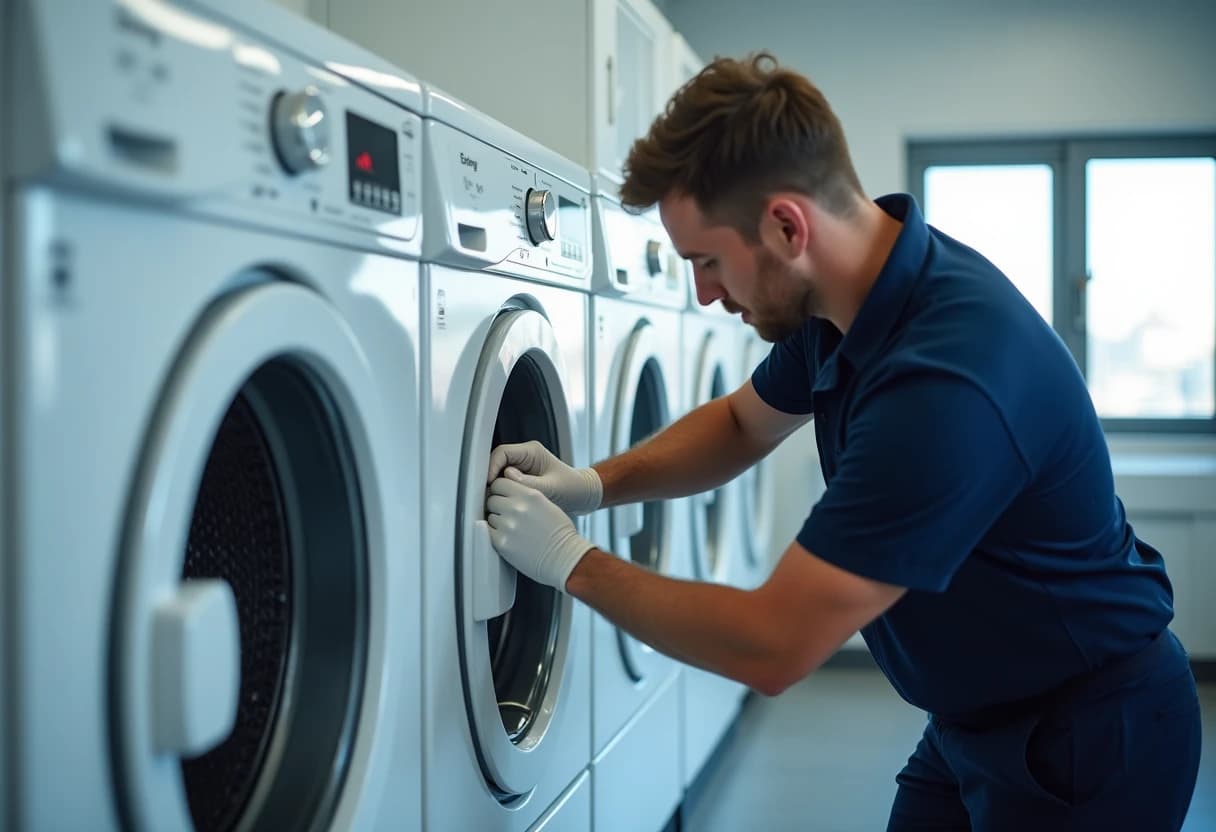
The call we never want to get from Lynnfield is the one after the fire. Dryer fires are overwhelmingly preventable — lint-clogged venting is the leading cause, per FEMA and NFPA — and in multi-family buildings a single unit's blocked vent endangers every neighbor sharing the structure. That is why insurers, and increasingly master-policy underwriters, ask associations for documented vent maintenance. Our program gives Lynnfield buildings the complete answer: scheduled whole-building cleanings with resident coordination handled by us, mechanical end-to-end cleaning of every vent and shared riser, immediate flagging of hazards like foil accordion transition ducts and crushed runs, and a unit-by-unit report formatted for board minutes and insurance files. Most buildings are completed in one to three days.
Why Commercial & Multi-Unit Dryer Vent Cleaning Matters for Lynnfield Homes
Residents cannot solve this problem individually, which is why it belongs to the building. A tenant or condo owner can clear their lint screen and perhaps the first few feet of transition hose — but the duct in the wall, the vertical riser shared with three neighbors, the forty-foot ceiling run to the far wall, and the termination flap four stories up are all beyond any resident's reach, tools and authority. Meanwhile every load every household dries adds lint to those shared paths. This is the classic common-element maintenance problem: individually invisible, collectively dangerous, and cheap to fix at building scale. A coordinated whole-building cleaning turns dozens of separate impossibilities into one efficient project — our coordinator handles notices and access scheduling, crews clear multiple units per hour once mobilized, no-access units are documented and revisited, and the building ends the week with every run verified clear. Boards that institutionalize it annually spend a modest per-door amount; buildings that leave it to residents are, in practice, leaving it to no one.
Ask any fire official who works near Lynnfield Town Common: dryer fires in multi-family buildings are among the most preventable calls they run. Lynnfield is largely a mid-century town of ranches, split-levels and Colonials built in the 1950s through 1970s, sprinkled with antique homes near the Common and upscale new construction around MarketStreet. The mid-century homes typically run original or once-replaced forced-air systems, and their long single-story duct runs collect decades of settled dust in low horizontal sections. Older multi-unit stock compounds the risk — long vent runs to reach exterior walls, shared chases, foil accordion transitions installed decades ago that code and manufacturers now prohibit. Homes around Pillings Pond and the Reedy Meadow wetlands sit on damp, low-lying ground where basements and crawlspace ducts pick up humidity all summer. Combined with heavy spring pine pollen from the town's mature tree canopy, Lynnfield systems benefit noticeably from regular cleaning and filtration upgrades. Our whole-building service is built for exactly this: every Lynnfield unit's vent mechanically cleaned end to end, hazardous configurations photographed and flagged in writing, terminations cleared and damper function verified, and a compliance report your association's insurer will actually accept.
Our Commercial & Multi-Unit Dryer Vent Cleaning Process in Lynnfield
1Building Walkthrough & Per-Unit Proposal
First we learn your building's venting anatomy, because no two multi-unit buildings vent alike. Stacked risers, basement manifolds, improvised renovation-era runs and individual wall vents each demand different equipment and time. The walkthrough maps it, a camera check of representative runs establishes condition honestly, and your written proposal reflects the actual building — not a per-vent teaser that grows on site.
2Resident Coordination & Scheduling
For occupied buildings, logistics decide whether a project succeeds. Ours run on a simple system: management distributes our notice template with dates; we sequence units floor by floor to keep crews moving; a coordinator handles reschedules and lockouts as they arise; and the final report distinguishes cleaned, no-access and exception units explicitly, because an insurer reading it will want exactly that distinction.
3Dryer-Side Service: Transition Duct & Connection
The first feet of the vent path fail most often: crushed transition hoses behind the dryer, lint packed at the wall connection, and prohibited foil accordion duct that sags into lint-collecting bellies. We service this section in every unit — machine pulled, area vacuumed, transition cleaned or replacement offered, connection remade properly — because a clean wall duct fed through a clogged transition solves nothing.
4Mechanical Cleaning of the Full Vent Run
The in-wall duct is cleaned end to end with rotary brush systems driven through the full run while a high-powered vacuum captures dislodged lint — the same agitation-plus-extraction principle as NADCA duct cleaning, sized for 4-inch dryer duct. Long runs and multiple elbows get repeat passes; the pass is complete when the brush returns clean and airflow verifies.
5Shared Risers, Common Trunks & Booster Fans
Common-element ducts get common-element treatment: documented condition before and after, cleaning with equipment sized for vertical and long-trunk work, and function checks on the mechanical components — booster fans, backdraft dampers, rooftop exhaust terminations — that keep a shared system moving air. For associations, this is the portion of the project that most clearly discharges the board's maintenance duty, and we document it accordingly.
6Termination Service & Exterior Verification
We finish each run where the air does: at the outside wall or roof. The termination is cleaned, its flap or damper exercised and verified, screens and nests removed, and the exhaust confirmed to discharge outdoors — not into an attic, soffit or crawlspace, a dangerous and surprisingly common Massachusetts finding. Interior-terminating vents are documented as the priority hazards they are.
7Airflow Verification & Building Compliance Report
Verification is what separates a maintenance program from a receipt. We confirm restored airflow run by run, re-photograph representative ducts against their before images, and compile the compliance report: every unit's status, every exception explained, every hazard located and pictured, every recommendation priced separately for board action. Associations on our annual program receive the same format each cycle, so year-over-year condition is genuinely comparable.
Benefits of Professional Commercial & Multi-Unit Dryer Vent Cleaning in Lynnfield
Longer Dryer Life & Fewer Appliance Failures
Thermal fuse failures, the classic 'dryer runs but no heat' complaint, are overwhelmingly a venting symptom — the fuse did its job against trapped heat. Buildings on an annual cleaning program see this entire complaint category shrink, which residents experience as reliable machines and managers experience as a quieter work-order queue.
Volume Pricing That Beats Unit-by-Unit Service
Left to individual residents, vent cleaning happens rarely, unevenly and at retail prices — and the shared ducts never get cleaned at all. Building-wide service inverts every part of that: complete coverage, common elements included, standardized quality, one invoice, and a per-unit rate that makes the line item easy to defend at budget time.
A Program, Not a Project
The real deliverable is the recurring cycle: annual (or duty-matched) cleanings calendared in advance, consistent per-unit pricing locked for program clients, the same report format every year so building condition trends are visible, and reminders that arrive before renewal questionnaires do. Boards approve it once; it protects the building indefinitely.
Hazard Discovery Before It Costs You
Every exception we flag is a future incident pre-empted: the crushed run behind a renovated wall, the riser takeoff installed backwards, the termination flap frozen shut that made one unit's dryer exhaust into the building. Boards receive these findings prioritized and priced, converting unknown risks into a manageable repair list.
Insurance & Liability Documentation That Holds Up
Boards carry a duty to maintain common elements, and in most governing documents the vent path beyond the unit wall qualifies. A dated, unit-by-unit report demonstrates that duty discharged — and the annual repetition of it demonstrates a program, which is what diligence actually looks like to a carrier or a court.
Directly Reduced Fire Risk, Building-Wide
Fire prevention in shared-wall housing is collective by nature: one blocked vent endangers the neighbors, and no resident can clean the common risers. A coordinated cleaning is the only mechanism that actually resets the whole building's risk — every run, every riser, every termination verified clear on the same dated report.
Signs Your Lynnfield Home Needs Commercial & Multi-Unit Dryer Vent Cleaning
Insurance Questionnaires or Post-Incident Requirements
Carriers writing habitational risk in Massachusetts have tightened on dryer venting because loss data justifies it. Boards seeing new questionnaire language, inspection requirements or premium credits tied to vent maintenance should read the market signal: this is now standard due diligence for multi-unit buildings, and the documented program is what compliance looks like.
Dryers Taking Two or More Cycles Per Load
Extended dry times are the classic first symptom of vent restriction: moist air cannot exit, so clothes tumble in humidity until the machine times out. When this complaint appears across multiple units in a building, the shared venting is implicated — and every affected dryer is running hotter and longer than its design intends.
No One Can Say When Vents Were Last Cleaned
If the answer is not in the maintenance file, the answer is effectively never — and lint has been accumulating in every run and riser since installation or the last renovation. A building-wide baseline cleaning with per-unit documentation starts the clock properly and gives the association its first real picture of vent condition.
High-Duty Operations: Laundromats & Common Laundry Rooms
Commercial duty cycles compress the maintenance calendar: a laundromat dryer produces in weeks the lint a household machine makes in a year, loading manifolded ducts continuously. If your store has never set a cleaning interval matched to throughput, the venting is overdue by definition — quarterly service is typical for busy operations.
Foil Accordion Ducts or Improvised Vent Runs in Units
If your association has never inspected what connects residents' dryers to the walls, assume nonconformance: transition duct is resident-installed, unregulated in practice, and frequently the worst link in the chain. Our unit visits document and correct these connections — the cheap fix that removes the most flammable segment of the entire vent path.
Burning Smells, Hot Laundry Areas or Tripped Thermal Fuses
Thermal fuses and high-limit switches exist to interrupt exactly this failure, and their tripping is diagnostic: heat had nowhere to go. Repeated no-heat service calls on building machines are the venting system burning through safety margins. Clean the exhaust paths before the next component in that chain is the lint itself.
Commercial & Multi-Unit Dryer Vent Cleaning Cost in Lynnfield, MA
Why volume pricing works in the association's favor: the expensive parts of vent cleaning are mobilization and setup, and a building project pays for them once across dozens of units. Crews sequenced through an access schedule complete multiple units per hour, so a 24-unit building might complete in a day at a per-door price no resident could obtain individually. Complexity moves the number: buildings where every unit vents a short run to its own wall cap sit at the low end near $40–$60 per unit; mid-rises with stacked risers, roof terminations and long ceiling runs price toward $70–$90 plus itemized riser service; and buildings needing hazard remediation — foil transition replacements (typically $45–$85 per unit installed), termination cap replacements, disconnected-run repairs — receive those items priced separately for board approval, never folded silently into the cleaning invoice.
Want the full pricing picture? See our complete Boston-area cost guide or call (617) 390-7145 for an exact flat quote for your Lynnfield home.
Local Knowledge: Lynnfield, Essex County
What makes Lynnfield different? Lynnfield is largely a mid-century town of ranches, split-levels and Colonials built in the 1950s through 1970s, sprinkled with antique homes near the Common and upscale new construction around MarketStreet. The mid-century homes typically run original or once-replaced forced-air systems, and their long single-story duct runs collect decades of settled dust in low horizontal sections. Homes around Pillings Pond and the Reedy Meadow wetlands sit on damp, low-lying ground where basements and crawlspace ducts pick up humidity all summer. Combined with heavy spring pine pollen from the town's mature tree canopy, Lynnfield systems benefit noticeably from regular cleaning and filtration upgrades. For duct and dryer vent systems, those local factors translate into specific, predictable problems — and predictable problems are the ones we solve fastest. Call (617) 390-7145, tell us your street and home style, and we will quote the job accurately the first time, usually in under five minutes.
The Best Time of Year in Lynnfield
Humid summers load the system differently. Moisture-saturated exhaust moving through ducts that pass humid basements and hot attics deposits damp lint that mats and clings rather than blowing free, and any leak in a run adds building humidity exactly when associations are fighting condensation and mold in common areas. Summer is also when hidden interior-terminating vents do their worst — exhaust released into attics and soffits during humid months feeds the mold conditions that surface as fall complaints. On the operational side, summer's lighter laundry loads make it the low-disruption season for building projects: residents are away, access scheduling is easier, and roof terminations are safely workable. Buildings that prefer minimal-impact scheduling often split the difference — cleaning in late summer, entering fall verified clear.
Why Choose Boston Air Duct Cleaners
We built this company around the jobs other duct cleaners do badly: the 130-year-old Victorian with panned-joist returns, the Lynnfield condo with a 60-foot dryer run to the roof, the post-renovation house full of drywall dust. Our crews see Greater Boston's hardest systems every week, and the experience shows in the details — floor protection on the way in, sealed registers during the work, HEPA-vacuumed work areas on the way out, and imagery that proves the ducts are actually clean. Call (617) 390-7145 and judge the difference from the first conversation.
Serving Lynnfield and Surrounding Communities
Beyond Lynnfield, our crews cover the surrounding communities daily — including Wakefield, Peabody, North Reading, Reading, Saugus, Middleton. Because routes cluster geographically, booking alongside a neighboring appointment often unlocks same-day service and combined-visit savings. Wherever you are in Essex County, the same flat-rate pricing, insured technicians and photo-documented process applies.