
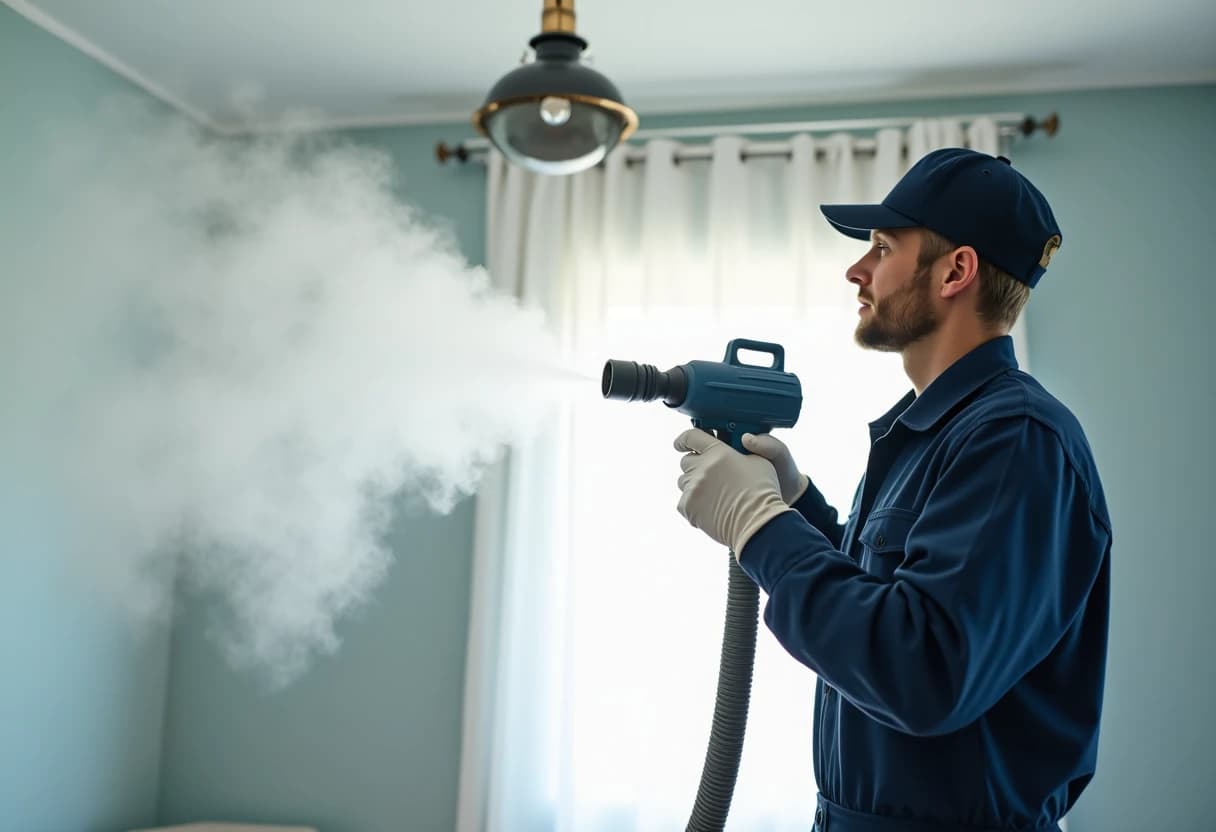
There is an honest version of duct sanitizing and a dishonest one, and the difference is sequence. Fogging chemicals through dirty ducts — the discount version — is theater: no product penetrates a mat of dust and biofilm, so the smell returns within weeks. The effective version treats sanitizing as step two of two: mechanical source-removal cleaning first, so surfaces are bare; then an EPA-registered, HVAC-labeled antimicrobial applied under airflow so coverage is complete. That is the only version we sell in Ipswich. Applied correctly, one treatment neutralizes pet, smoke and musty odors at their source, sanitizes the full air path, and keeps the system smelling neutral for years rather than days.
Why Air Duct Sanitizing & Deodorizing Matters for Ipswich Homes
Certain situations turn sanitizing from optional to strongly advised. After confirmed microbial growth or a mold finding, treatment of the cleaned surfaces inhibits recolonization while the moisture fix takes hold. After rodent or pest activity in the ductwork, sanitizing addresses the bacterial and viral load droppings leave behind — a genuine health matter, not merely an aesthetic one. After fire or heavy smoke exposure, deodorizing treatment neutralizes the acrid residue that otherwise off-gasses for years. After a water event, it suppresses the microbial bloom that damp ducts incubate. And at move-in, it resets a system whose history you cannot verify. In each case the logic is the same: cleaning removes what is visible, sanitizing addresses what is biological. Conversely — and we say this plainly because the industry often will not — a routinely maintained system with no odor, no moisture history and no contamination event does not need sanitizing, and the EPA does not recommend routine biocide use in ducts. We inspect first and recommend accordingly. Roughly a third of the time, our recommendation is to skip it.
Air in Ipswich carries its own seasonal load. Between the tidal Ipswich River, the salt marshes and Crane Beach, humidity and salt air press on this town from three sides, keeping duct interiors and crawlspaces damp deep into fall. In the First Period homes downtown, retrofit duct runs snake through centuries-old cavities that accumulate dust from plaster, timber and long-settled chimneys. Ipswich holds more surviving First Period houses than any other community in America, and its downtown streets are lined with 17th- and 18th-century homes where any forced-air system is by definition a careful retrofit through hand-hewn framing. Beyond the historic core, seasonal cottage colonies on Great Neck and Little Neck have largely converted to year-round living, alongside mid-century and newer homes out the Linebrook corridor. Between humid summers dampening duct interiors and long winters sealing houses around whatever the system holds, odors here compound year over year rather than airing out. Sanitizing resets that accumulation: after cleaning strips the film, EPA-registered treatment neutralizes the bacteria and residue that generate the smell, and the closed-window months circulate neutral air instead of concentrated history. Fall bookings from Ipswich fill early for precisely this reason — call ahead of the season.
Our Air Duct Sanitizing & Deodorizing Process in Ipswich
1Odor Assessment & Honest Qualification
Not every odor is a duct odor, and not every duct needs sanitizing — the EPA does not recommend routine biocide use, and neither do we. Your visit starts with diagnosis: camera inspection of the duct film, a look at the coil and drain pan, moisture readings where mustiness is the complaint. You get a straight answer about whether treatment is warranted before anyone sells you anything.
2Source-Removal Cleaning First
EPA guidance is explicit that treatments belong on cleaned surfaces only, and our sequence honors it: full source-removal cleaning before any product is introduced. This is the honest-versus-theater divide in duct sanitizing. Fog through dirty ducts and the smell returns in weeks as bacteria recolonize the untouched film; clean first and the treatment bonds to bare metal, where it can actually work.
3Product Selection & Preparation
Preparation is checklist work that determines results: product selected for your specific odor profile, dilution mixed to label specification, fogging equipment matched to your system's size so droplet distribution covers the full duct network. We also plan the airflow path — which registers stay open, how the blower assists — so the treatment reaches the far end of every run, not just the trunks.
4Whole-System Antimicrobial Fogging
With the system freshly cleaned, the EPA-registered fog does its work at the surface level: contact-killing the bacteria that metabolize duct residue into odor, neutralizing the residual film chemically, and leaving an inhibiting layer that suppresses microbial regrowth. The application follows label contact times precisely — this is regulated chemistry applied to specification, not a scented mist waved through the vents.
5Coil, Drain Pan & Blower Treatment
Your system's odor epicenter is usually the equipment, not the ducts: the coil and drain pan stay wet all cooling season, breeding the bacteria behind classic dirty-sock smell. We clean and treat both, clear the condensate trap, and sanitize the blower assembly that pushes air past them — closing the loop so the freshly treated ductwork is not immediately re-contaminated from upstream.
6Deodorizing Pass for Stubborn Odors
Smoke and heavy pet situations get a second, targeted pass with odor-counteractant chemistry — products that bind and neutralize odor molecules rather than perfume over them. Tobacco residue in particular clings aggressively to metal and re-releases for years; the counteractant pass addresses it specifically. This step is included when the assessment calls for it and skipped, with the price reflecting that, when it does not.
7System Airing, Verification & Walkthrough
We leave the system running clean and documented: registers remounted, a fresh filter installed on request, treatment records in your file, and honest guidance on what to expect — a faint clean-neutral note for a day or two as the treatment cures, then nothing. If the odor you hired us to kill ever returns in the following months, you call, we come back. That simple.
Benefits of Professional Air Duct Sanitizing & Deodorizing in Ipswich
Musty Summer Smell Broken for Good
That damp blast at AC start-up is bacteria metabolizing humid duct film — a cycle that returns every muggy stretch and worsens annually. Sanitizing removes the film and leaves treated surfaces the biology cannot recolonize, so the next humid week produces silence from the registers. For many Massachusetts households this is the first summer without the smell in a decade.
Odors Neutralized at the Source, Not Masked
Homeowners who have fought a duct-borne smell describe the same arc: sprays, candles, filters, ozone gadgets, shampooed carpets — hundreds of dollars of masking, months of frustration, smell intact. Source treatment ends the arc in one visit because it is aimed at the right target. The register air itself comes out neutral, so the rooms finally stay that way.
Small Add-On Cost, Outsized Payoff
For sellers, the return is measurable: smell shapes showings within seconds, and a few hundred dollars of source treatment protects list price far better than thousands in cosmetic touch-ups layered over an odor buyers will attribute to bigger problems. Agents who have watched a musty or pet-scented listing sit know exactly why they refer us pre-listing.
Smoke Ghosts Finally Evicted
If a home smelled of cigarettes at the showing and still does after renovation, the air system is the unrenovated room. Smoke rode the returns for years, coating the full duct network with residue no one ever addresses. Treating that network is routinely the missing piece that finally clears a smoker's house — and the step savvy buyers now negotiate into the purchase.
Microbial Load Reduced System-Wide
Ducts are a microbial habitat by design — dark, textured, dust-fed and periodically damp. Sanitizing knocks the resident population down to baseline and leaves an inhibiting residue that slows recolonization for years. It is not sterility, and no honest company promises that; it is a substantially cleaner biological starting point for all the air you breathe at home.
Pet Odor Elimination That Actually Holds
Multi-pet and long-tenure pet households benefit most: the accumulation scales with animal-years, and no surface cleaning touches the duct-borne share. Post-treatment, the improvement compounds — ongoing dander still sheds, but it lands in a neutral system rather than layering onto decades of saturated film, and routine filter changes keep the new baseline for years.
Signs Your Ipswich Home Needs Air Duct Sanitizing & Deodorizing
Smoke History in the Home
The classic frustration: a fully renovated home that still exhales cigarettes on the first hot day. The renovation never entered the ductwork, where smoke residue coats every run the returns fed for years. If your renovation checklist did not include the air system, the smell has a protected reservoir — and an easy explanation for its persistence.
Guests Notice a Smell You No Longer Can
A useful self-test: leave home for a full week, then pay attention in the first ten seconds through the front door before your nose recalibrates. Whatever you catch in that window is what everyone else gets every visit. If there is anything there — mustiness, animals, staleness — the air system is the first place to look.
You Just Bought the Home
Even a home that smells fine at purchase benefits from the reset when history is unknown: odor thresholds are personal, previous owners' normal may not be yours, and the first heating season has a way of releasing what summer showings concealed. Buyers who sanitize at move-in never have to wonder what October's first furnace cycle will announce.
Musty Blast When the Heat or AC Starts
Cycle-start odor means the smell is being generated inside the system and flushed out with the first air movement. Intermittent mustiness responds fully to sanitizing; a strong, constant or worsening version can indicate active mold colonization, which our inspection distinguishes — a difference that matters, since mold removal involves containment protocols and different pricing.
Odors Return No Matter How Much You Clean
Count what you have already tried: shampooed carpets, washed walls, new air filters, open windows, every candle in the store. When that entire arsenal fails against a smell, you are not fighting a surface — you are fighting a reservoir with a fan attached. Treating the reservoir is the move that finally works.
Pets Present or Past
The threshold question: can guests tell you have animals without seeing them? If yes, the ducts are broadcasting, and the smell is stronger than your adapted nose reports. Households with multiple pets or long pet tenure carry proportionally heavier duct reservoirs, and they see the most dramatic before-and-after from a single cleaning-plus-treatment visit.
Air Duct Sanitizing & Deodorizing Cost in Ipswich, MA
A note on what drives our costs, because transparency beats mystery pricing. EPA-registered antimicrobials labeled for HVAC use cost genuinely more than the hardware-store alternatives we refuse to use — registration means the product's efficacy and safety data were reviewed for exactly this application, and label-rate application means measured dilutions, not eyeballed ones. Fogging equipment sized for whole-duct-network coverage, technician time for the coil-pan-blower wet section, and the assessment that qualifies the job honestly all live in the price. So does the callback promise: if the odor we treated returns in the following months, we return with it. What is not in the price: routine-maintenance upsell — the EPA does not recommend scheduled biocide application in residential ducts, and a company suggesting annual sanitizing regardless of conditions is selling chemistry you do not need. Sanitize when odors, contamination events or move-ins warrant it; between those moments, a clean system and decent filtration are all your ducts require, and we will tell you exactly that.
Want the full pricing picture? See our complete Boston-area cost guide or call (617) 390-7145 for an exact flat quote for your Ipswich home.
Local Knowledge: Ipswich, Essex County
Every town's ductwork tells the story of its housing. Ipswich holds more surviving First Period houses than any other community in America, and its downtown streets are lined with 17th- and 18th-century homes where any forced-air system is by definition a careful retrofit through hand-hewn framing. Beyond the historic core, seasonal cottage colonies on Great Neck and Little Neck have largely converted to year-round living, alongside mid-century and newer homes out the Linebrook corridor. Between the tidal Ipswich River, the salt marshes and Crane Beach, humidity and salt air press on this town from three sides, keeping duct interiors and crawlspaces damp deep into fall. In the First Period homes downtown, retrofit duct runs snake through centuries-old cavities that accumulate dust from plaster, timber and long-settled chimneys. We plan Ipswich jobs around those realities, from equipment selection to time on site, and it shows in the results. If you live near Appleton Farms or anywhere across Ipswich's 01938 area, we have almost certainly cleaned a system like yours before — and we can tell you exactly what to expect before we arrive.
The Best Time of Year in Ipswich
Summer humidity is the engine of Greater Boston's duct-odor cycle. When dew points camp in the high 60s, moisture condenses on every cool surface in the air path — coil, pan, basement trunk lines — and the organic film absorbs it like a sponge. Bacteria respond within days, and their metabolism is the musty smell that arrives with every cooling cycle from July onward. Coastal and near-coastal homes get an extended version, with marine air keeping duct-adjacent spaces damp well into fall. Sanitizing breaks the biological half of the cycle; pairing it with the moisture-side fixes — insulating sweating runs, managing basement humidity, keeping condensate lines clear — breaks the whole loop, and the pairing is what turns a yearly complaint into a solved problem.
Why Choose Boston Air Duct Cleaners
As a West Newton-based company, we treat Ipswich like the neighborhood it is — because for us, it is. Our reputation lives or dies on local referrals, so every job gets the full process: complete system cleaning under negative pressure, mechanical agitation of every run, blower compartment service, and a documented walkthrough before we leave. We are licensed and insured, our estimates are free and flat, and our schedule holds same-day slots for urgent calls. One visit and you will understand why neighbors keep our magnet on the fridge.
Serving Ipswich and Surrounding Communities
We serve every community around Ipswich as well: Rowley, Hamilton, Essex, Topsfield, Georgetown, Gloucester all fall inside our regular service routes. If you have a second property, a rental, or family nearby, ask about multi-home scheduling — grouped appointments on the same route are our most requested discount.