
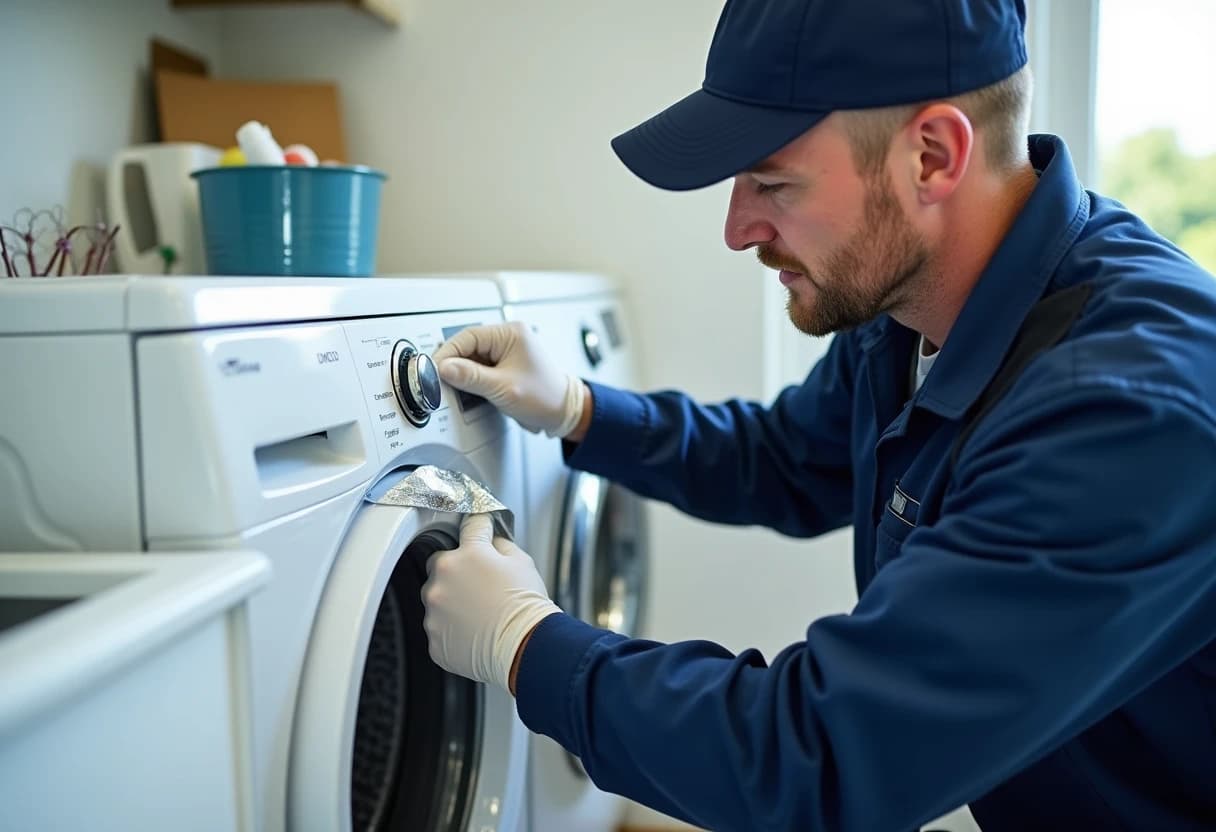
Homeowners in Chelsea usually discover a broken dryer vent through a symptom that seems unrelated: a water stain on the ceiling under the laundry, lint appearing in the basement, a mildew smell in one wall, or an energy bill that crept up as the dryer strained. Our repair service finds the failure and fixes it for good — with 4-inch smooth rigid metal duct, joints fitted and clamped without airstream-piercing screws, seams sealed with UL-listed foil tape, and a new exterior hood where the old damper has failed. We are local, insured, and we photograph every repair so you can see exactly what was wrong and exactly what made it right.
Why Dryer Vent Repair Matters for Chelsea Homes
There is also a timing argument: dryer vent damage compounds, and early repair is dramatically cheaper than late repair. A loose joint today is a separated joint next year — and a wall cavity full of lint and moisture the year after, when the fix has grown from a $150 reconnection into drywall opening, cavity cleaning, and possibly mold remediation. A crushed transition hose today is a strained heating element and blown thermal fuse next winter, adding an appliance repair bill to the vent repair that was needed anyway. A failing damper today is a nest blockage by spring. This is why we treat inspection as the heart of the service: our technicians walk the entire exhaust path, test airflow at both ends, and give you a photographed, prioritized picture of what is failing and what it costs to fix now versus later. Most Chelsea repairs land between $150 and $450 and finish in a single visit — a modest price for closing off the expensive futures.
Multi-family Chelsea properties — triple-deckers, condo conversions, brownstone associations near Chelsea Creek waterfront — bring dryer venting problems that single-family playbooks miss: long shared-wall runs, terminations several stories up, and repairs that need association sign-off and insurance documentation. Chelsea is one of the densest cities in Massachusetts, rebuilt largely in wood-frame triple-deckers and multifamily rows after the great fires of 1908 and 1973, now joined by modern apartment blocks in the Box District and along the waterfront. Many of the older multifamilies run separate compact forced-air or heat-pump systems per unit, with short duct runs that clog quickly in dense living conditions. We handle all of it, providing certificates of insurance, written scopes for board approval, and photo documentation of completed work. Chelsea sits beside Route 1, the Tobin Bridge and active Chelsea Creek fuel terminals, so airborne soot and diesel particulates settle into duct systems here faster than almost anywhere else we serve. Frequent cleaning makes a measurable difference for the many multi-generational households sharing tight quarters. When one unit's disconnected vent is loading a shared ceiling cavity with lint and moisture, the whole building has a stake in the repair — and we are the crew associations across Suffolk County call to make it right.
Our Dryer Vent Repair Process in Chelsea
1Diagnose the Full Exhaust Path
Repair starts with finding every failure, not just the obvious one. We trace the duct from the dryer's outlet to the exterior termination, inspecting each accessible section and joint, and test airflow at both ends with the dryer running. Weak exterior flow with strong drum heat means the exhaust is escaping en route — and we find where.
2Protect the Area & Open Access
Before repair work, we protect floors and finishes along the work path, move the dryer out carefully on sliders, and set up at the failure points. Where a concealed joint requires access, we discuss options first — many repairs can be made from existing openings, and when cutting is unavoidable we keep openings minimal and tell you exactly what restoration will involve.
3Reconnect & Properly Fasten Separated Joints
Where lint and moisture have escaped into a cavity through a long-standing disconnection, we vacuum accessible accumulation with HEPA equipment and document conditions with photos. Removing that hidden fuel load matters as much as the reconnection itself — and the photos give you a record for insurance or future renovation planning.
4Replace Crushed, Corroded or Non-Compliant Sections
Duct that is crushed, kinked, rusted through or made of prohibited material gets replaced, not patched. We install 4-inch smooth-interior rigid metal duct — the material the IRC's dryer exhaust rules specify — cut to fit, joined without airstream-piercing fasteners, and supported so it cannot sag into water-pooling bellies.
5Cure Condensation: Slope, Seal & Insulate
Moisture-damaged components are replaced as part of the cure: corroded duct sections, rusted clamps, sodden insulation. We also check the termination damper, since a flap frozen or stuck partly shut is a common hidden cause of the backpressure that drives moist exhaust out through joints in the first place.
6Repair or Replace the Exterior Hood & Damper
Where pests have entered through a failed damper, we remove nesting material from the duct, clean the affected section, and install a termination with pest protection that does not restrict airflow. If the old hood was painted shut — common on older multi-family buildings — we free or replace it and note the repaint risk for the future.
7Replace the Transition Duct & Reset the Dryer
This step catches the last common failure point: many 'vent problems' are actually transition hoses flattened to a slot behind the machine. The compliant connector, correctly fitted and protected by proper dryer placement, ensures the airflow we restored in the wall actually reaches the duct from the appliance.
8Verify Airflow & Document the Repair
Finally we log the service and recommend a cleaning schedule for the repaired system — typically annual. A repaired vent with smooth rigid duct and a proper termination accumulates lint far more slowly than the failed system it replaced, and the documentation we leave shows exactly what is now behind your walls.
Benefits of Professional Dryer Vent Repair in Chelsea
Moisture Out of Your Walls and Ceilings
Condensation repairs — slope, sealing, insulation — end the drip-and-pool cycle that rusts ducts from the inside and stains ceilings from above. Laundry areas dry out, winter window condensation eases, and the musty smell that clung to the wall behind the dryer leaves with the moisture feeding it.
A Serious Fire Hazard, Eliminated
Lint inside a wall cavity cannot be cleaned on any schedule; the only fix is stopping the leak that puts it there. Repairing disconnections and sealing joints confines lint to the duct, where annual cleaning can manage it. That containment is the difference between a maintainable system and a slowly growing hazard you cannot see.
Code Compliance & Inspection-Ready Documentation
Dryer venting is a standard flag on Massachusetts home inspections: vinyl flex, taped joints, screened hoods and overlong runs all appear in reports and complicate sales. Our repairs bring the system to current code — rigid metal, compliant joints, proper termination — with photo documentation that answers inspector and buyer questions before they are asked.
Lower Energy and Repair Bills
A dryer fighting a damaged vent runs longer per load and hotter per minute — both metered directly on your utility bill, often $10 to $20 a month for a busy household. Repair returns cycles to design length. The savings recur every laundry day, quietly repaying the one-time repair cost within the first year or two.
Pest Entry Points Closed
Pest damage rarely stays at the hood: rodents that enter a duct chew insulation and nest against warm sections deep in the run. Closing the entry point promptly is far cheaper than the extended cleaning and repair an established rodent presence demands — one more reason failing dampers deserve fast attention.
Decades of Reliable Service From One Repair
We stand behind the work: repairs are documented, photographed and guaranteed, and because we also clean vents, we see our own repairs again on annual visits — a feedback loop that keeps our standards honest. The repair you buy is one we expect to inspect ourselves for years.
Signs Your Chelsea Home Needs Dryer Vent Repair
Exterior Damper Broken, Stuck or Missing
Look at the hood outside: a damper flap hanging loose, rusted stiff, cracked off, painted shut or missing entirely is a failed termination. Stuck open, it drains heat and admits pests all winter; stuck shut, it blocks the vent completely. Either way the fix is a proper replacement hood — one of the fastest, most cost-effective repairs on our list.
Water Stains, Drips or Peeling Paint Near the Vent Path
A ceiling stain below a second-floor laundry, paint bubbling behind the dryer, or drips from a basement duct joint all point to exhaust moisture escaping or condensing in the run. Each load adds another gallon of vapor to the problem. Repair — sealing, sloping, insulating or replacing the affected section — stops the source; cosmetic fixes without it just repaint the symptom.
A Home Inspection or Appliance Tech Flagged the Vent
Inspection reports flag dryer venting constantly in Massachusetts: vinyl flex, taped or screwed joints, screened hoods, overlong concealed runs. Take the flag seriously — inspectors see the aftermath of ignored vents — and bring us the report. We translate findings into a flat-priced repair scope and documentation that closes the issue for buyers, sellers and insurers.
Slow Drying That Cleaning Didn't Fix
A dryer that dries poorly immediately after being moved, after appliance delivery, or after renovation work near the laundry almost certainly has a crushed transition or a disturbed joint — the timing is the clue. These are among the quickest, least expensive repairs we make, often at the bottom of the $150 to $450 range.
Lint Appearing Where It Shouldn't
Check the floor and framing along the vent's path, especially in basements where runs hang exposed: a dusting of gray fiber below any joint is a positive test for leakage there. The joint may look intact from below while a gap on top sheds lint and moisture into the cavity above it.
Visibly Damaged, Kinked or Sagging Duct
Trust your eyes: a transition hose flattened behind the dryer, a dented or crushed section in the basement, duct sagging between supports into a low belly, or a run held together with fabric duct tape are all failures in progress. Each restricts airflow, collects lint and moisture, and worsens with time. Photograph what you see and call — the quote is quick.
Dryer Vent Repair Cost in Chelsea, MA
Compare the repair cost against what the failure costs to keep. A leaking vent delivers roughly a gallon of water per load into your building assemblies — and chronic wall moisture matures into mold remediation and drywall work that starts around $1,500 and climbs steeply. A crushed or blocked duct overworks the dryer into $150 to $400 appliance repairs (thermal fuses, elements, switches) that recur until the vent is fixed, while adding $10 to $20 a month in energy waste. A failed damper leaks heated air all winter and invites nest blockages every spring. And every one of these failures raises fire risk in a system that already accounts for about 2,900 US home fires a year. Against that ledger, $150 to $450 for a permanent, code-compliant repair is one of the clearest-value maintenance purchases in the home. Most customers who see the diagnostic photos do not need convincing; the duct makes the argument itself.
Want the full pricing picture? See our complete Boston-area cost guide or call (617) 390-7145 for an exact flat quote for your Chelsea home.
Local Knowledge: Chelsea, Suffolk County
Serving Chelsea means knowing Chelsea. Chelsea is one of the densest cities in Massachusetts, rebuilt largely in wood-frame triple-deckers and multifamily rows after the great fires of 1908 and 1973, now joined by modern apartment blocks in the Box District and along the waterfront. Many of the older multifamilies run separate compact forced-air or heat-pump systems per unit, with short duct runs that clog quickly in dense living conditions. Chelsea sits beside Route 1, the Tobin Bridge and active Chelsea Creek fuel terminals, so airborne soot and diesel particulates settle into duct systems here faster than almost anywhere else we serve. Frequent cleaning makes a measurable difference for the many multi-generational households sharing tight quarters. Those conditions shape how we work here: which brush heads come off the truck, how we protect finishes in older interiors, and what we expect to find when the camera goes into a 02150 duct system. Our crews are in and around Chelsea nearly every week — often for neighbors of past customers — so scheduling is fast and our arrival windows hold.
The Best Time of Year in Chelsea
Winter exposes dryer vent damage that hides all year. Joints that leak slightly in summer drip visibly when exhaust moisture condenses hard against freezing duct; marginal dampers ice shut; snow buries grade-level hoods; and the season's heavy laundry loads push maximum moisture through every weak point. Massachusetts repair calls spike from December through February for exactly these reasons — and because a blocked or leaking vent in a sealed-up winter house sends its moisture and, for gas dryers, combustion byproducts into air that will not be refreshed until spring. If your vent showed symptoms last winter, repairing it in fall is the calm, scheduled alternative to an emergency call during a January cold snap with a full laundry basket waiting.
Why Choose Boston Air Duct Cleaners
We built this company around the jobs other duct cleaners do badly: the 130-year-old Victorian with panned-joist returns, the Chelsea condo with a 60-foot dryer run to the roof, the post-renovation house full of drywall dust. Our crews see Greater Boston's hardest systems every week, and the experience shows in the details — floor protection on the way in, sealed registers during the work, HEPA-vacuumed work areas on the way out, and imagery that proves the ducts are actually clean. Call (617) 390-7145 and judge the difference from the first conversation.
Serving Chelsea and Surrounding Communities
Chelsea sits in the heart of our service area, and neighboring Everett, Revere, East Boston, Charlestown, Winthrop, Malden appointments share the same routes. That density is why our response times in this part of Suffolk County are among our fastest — and why you will see our trucks in the area week after week.