
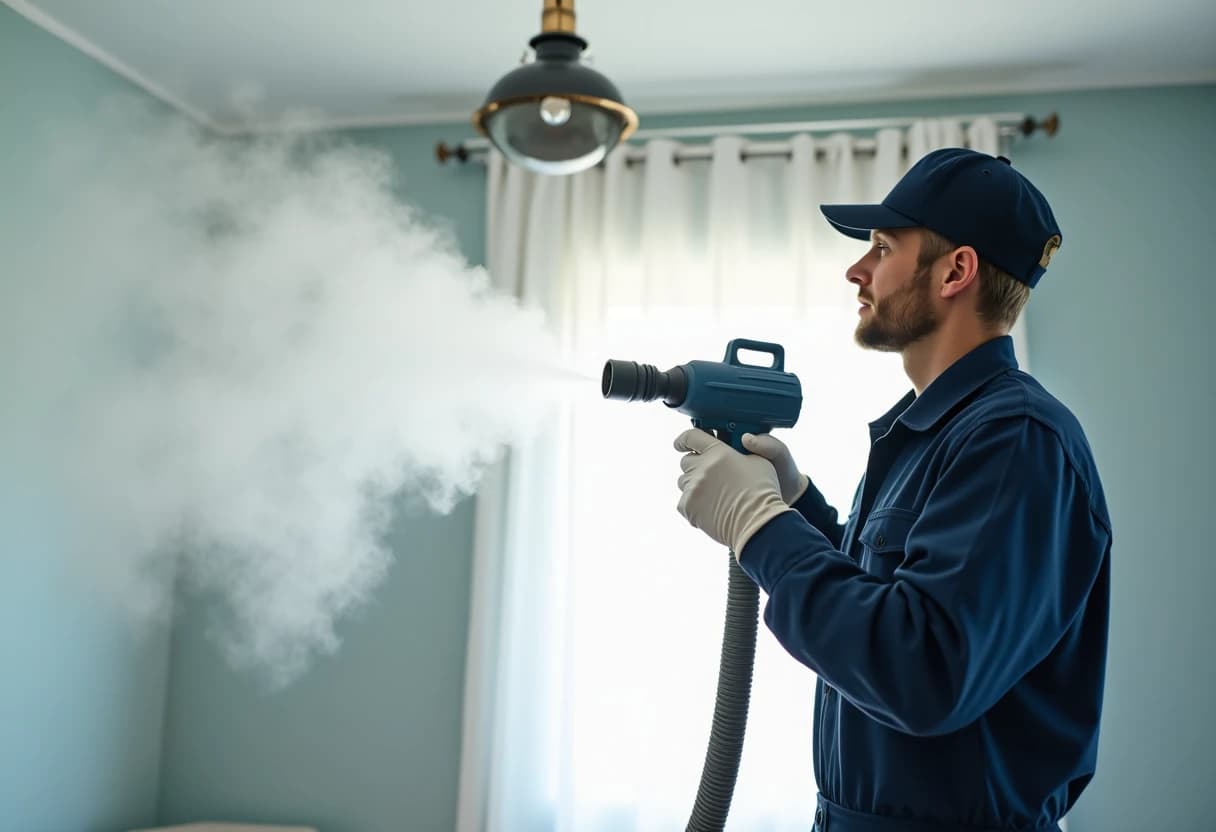
The EPA's guidance on duct treatments is specific: chemical biocides should be applied only after mechanical cleaning, and only products registered for use in HVAC systems belong in your air path. That is exactly how we sanitize ducts in Mansfield. First the system is cleaned to bare surfaces under negative pressure; then an EPA-registered antimicrobial is atomized through the supply and return network at label rates, treating the seams, joints and textures no brush can fully reach. The treatment kills odor-causing bacteria, neutralizes microbial residue and inhibits regrowth — and because it lands on clean metal rather than a dust blanket, it actually works. We will also tell you plainly when your system does not need it.
Why Air Duct Sanitizing & Deodorizing Matters for Mansfield Homes
Certain situations turn sanitizing from optional to strongly advised. After confirmed microbial growth or a mold finding, treatment of the cleaned surfaces inhibits recolonization while the moisture fix takes hold. After rodent or pest activity in the ductwork, sanitizing addresses the bacterial and viral load droppings leave behind — a genuine health matter, not merely an aesthetic one. After fire or heavy smoke exposure, deodorizing treatment neutralizes the acrid residue that otherwise off-gasses for years. After a water event, it suppresses the microbial bloom that damp ducts incubate. And at move-in, it resets a system whose history you cannot verify. In each case the logic is the same: cleaning removes what is visible, sanitizing addresses what is biological. Conversely — and we say this plainly because the industry often will not — a routinely maintained system with no odor, no moisture history and no contamination event does not need sanitizing, and the EPA does not recommend routine biocide use in ducts. We inspect first and recommend accordingly. Roughly a third of the time, our recommendation is to skip it.
We treat a steady stream of odor calls from Mansfield, from condos near South Common to family homes out toward Mansfield Crossing, and the pattern is consistent: the smell survives every surface remedy because it lives in the air system. Mansfield grew fast after I-495 arrived, so the dominant stock is 1980s-to-2000s Colonials and capes in subdivision loops, along with newer townhouse and apartment complexes near the commuter rail station. Nearly all of it is ducted forced-air from original construction, which means full-system cleanings here are straightforward but long overdue in homes hitting the 25- and 35-year marks. That age of housing stock means duct film with a long biography. Because our shop is in West Newton, roughly 28 miles away, we can usually schedule Mansfield sanitizing visits within days — often bundled with cleaning in one appointment, which is both cheaper and more effective.
Our Air Duct Sanitizing & Deodorizing Process in Mansfield
1Odor Assessment & Honest Qualification
Not every odor is a duct odor, and not every duct needs sanitizing — the EPA does not recommend routine biocide use, and neither do we. Your visit starts with diagnosis: camera inspection of the duct film, a look at the coil and drain pan, moisture readings where mustiness is the complaint. You get a straight answer about whether treatment is warranted before anyone sells you anything.
2Source-Removal Cleaning First
Step one is removing the reservoir. The odor-saturated film lining your ducts is physically extracted under negative pressure — rotary brushes and pneumatic whips strip it from every supply, return and trunk while the HEPA vacuum captures it. Most of the odor leaves the house in this step; the fogging that follows neutralizes what remains and prevents the smell from rebuilding.
3Product Selection & Preparation
Only two kinds of products enter your air path: antimicrobials EPA-registered specifically for use in HVAC systems, and deodorizing counteractants formulated for duct application. No bleach, which corrodes ducts; no ozone shock treatments, which the EPA warns are ineffective at safe concentrations; no fragrance bombs that mask rather than neutralize. Dilutions follow the label exactly — that is what EPA registration means.
4Whole-System Antimicrobial Fogging
Fogging is the delivery method that makes duct sanitizing whole-system rather than spot treatment. Atomized at the micron scale, the antimicrobial behaves like the air itself, riding the airflow into every branch, riser and return the blower serves. Everywhere your air travels, the treatment travels — which is precisely why it works on odors that a hand-sprayed register never touches.
5Coil, Drain Pan & Blower Treatment
The dampest components carry the strongest biology, so the air handler wet section gets direct treatment: evaporator coil surfaces, the drain pan and its trap, and the blower wheel and housing. Musty odors disproportionately originate here — a slimy pan or biofilmed coil can perfume an entire house — and treating the ducts while skipping the equipment leaves the source in place.
6Deodorizing Pass for Stubborn Odors
Severe cases get layered treatment: antimicrobial fogging for the biology, counteractant application for chemical residue, and where warranted, guidance on the adjacent surfaces — returns pull air across ceilings and walls, and a smoke-saturated house can re-seed clean ducts. We are candid about that boundary: ducts are our domain, and we will tell you when a whole-home odor needs remediation beyond them.
7System Airing, Verification & Walkthrough
We leave the system running clean and documented: registers remounted, a fresh filter installed on request, treatment records in your file, and honest guidance on what to expect — a faint clean-neutral note for a day or two as the treatment cures, then nothing. If the odor you hired us to kill ever returns in the following months, you call, we come back. That simple.
Benefits of Professional Air Duct Sanitizing & Deodorizing in Mansfield
Musty Summer Smell Broken for Good
Beyond comfort, the musty smell is diagnostic: it means active microbial metabolism in your air path, which trends toward visible colonization if the conditions persist. Treating it early — film removed, surfaces sanitized, moisture noted and addressed — is both the fix and the prevention, and materially cheaper than the mold removal that unchecked growth eventually requires.
A True Reset for Newly Purchased Homes
You inspected the roof, the furnace and the foundation before buying; the air system's biological history was invisible on every report. A move-in sanitizing closes that gap, decontaminating the one system that touches every room before your family settles in. Scheduled between closing and move-in, it is the cheapest and easiest it will ever be — empty house, open access, one afternoon.
Microbial Load Reduced System-Wide
After specific contamination events — pest activity in the ducts, confirmed mold, water intrusion — this benefit becomes the headline: droppings, spores and bloom residue carry genuine pathogen and allergen loads, and mechanical cleaning alone does not neutralize them. The EPA-registered treatment does, which is why sanitizing moves from optional to advised the moment contamination history enters the picture.
Smoke Ghosts Finally Evicted
If a home smelled of cigarettes at the showing and still does after renovation, the air system is the unrenovated room. Smoke rode the returns for years, coating the full duct network with residue no one ever addresses. Treating that network is routinely the missing piece that finally clears a smoker's house — and the step savvy buyers now negotiate into the purchase.
Odors Neutralized at the Source, Not Masked
Homeowners who have fought a duct-borne smell describe the same arc: sprays, candles, filters, ozone gadgets, shampooed carpets — hundreds of dollars of masking, months of frustration, smell intact. Source treatment ends the arc in one visit because it is aimed at the right target. The register air itself comes out neutral, so the rooms finally stay that way.
Pet Odor Elimination That Actually Holds
The cruel mechanics of pet odor: residents go nose-blind while every guest detects it instantly. If you have wondered whether your house 'smells like dog,' the ducts are almost certainly broadcasting more than you can perceive. Sanitizing after source-removal cleaning resets the broadcast to zero — and unlike surface remedies, it stays reset, because the reservoir itself is gone.
Signs Your Mansfield Home Needs Air Duct Sanitizing & Deodorizing
Guests Notice a Smell You No Longer Can
The cruelest version arrives during a home sale: buyers and agents smell in thirty seconds what you have not smelled in years, and it costs you at the negotiating table either way. Pre-listing duct sanitizing addresses the odor you cannot perceive at its distribution point — which is why experienced listing agents put it on the prep checklist.
You Just Bought the Home
Even a home that smells fine at purchase benefits from the reset when history is unknown: odor thresholds are personal, previous owners' normal may not be yours, and the first heating season has a way of releasing what summer showings concealed. Buyers who sanitize at move-in never have to wonder what October's first furnace cycle will announce.
Musty Blast When the Heat or AC Starts
A damp, sour or dirty-sock note in the first minutes of a cycle, fading as the system runs, points to microbial activity on the coil, in the drain pan or along the duct film. It is most common in cooling season and after humid stretches. The pattern is diagnostic — and it is exactly what cleaning plus antimicrobial treatment eliminates.
After Pests, Mold or Water in the System
Rodent or insect activity in ductwork leaves droppings, nesting debris and bacterial contamination that mechanical cleaning removes but does not neutralize — the sanitizing pass is what addresses the biological load. Any pest history that touched the air system should end with an EPA-registered treatment, and the odor benefit arrives as a bonus.
Pets Present or Past
Allergy dynamics compound the odor case: duct-borne dander affects sensitive visitors and family members even when the smell is subtle. A treated system cuts both the odor and the circulating allergen load, which is why families expecting a new baby, hosting an allergic relative, or rehoming after a pet's passing all book this same service.
Odors Return No Matter How Much You Clean
Count what you have already tried: shampooed carpets, washed walls, new air filters, open windows, every candle in the store. When that entire arsenal fails against a smell, you are not fighting a surface — you are fighting a reservoir with a fan attached. Treating the reservoir is the move that finally works.
Air Duct Sanitizing & Deodorizing Cost in Mansfield, MA
Three questions set your price. First, is the system clean? Freshly cleaned ducts qualify for standalone treatment pricing; ducts carrying normal accumulation need the cleaning-plus-sanitizing bundle, because fogging over dust fails chemically. Second, what is the odor? Musty, pet and general staleness respond to the EPA-registered antimicrobial pass; tobacco, fire smoke and heavy cooking residue need the additional counteractant chemistry, which adds modestly to the price. Third, how big is the system? A compact ranch with ten runs sits at the range's bottom; a three-zone colonial with twenty-five runs sits at the top, purely on product volume and application time. Across Bristol County, typical outcomes: $325 to $550 bundled for average homes, $500 to $700 bundled for large ones, standalone treatments from $250. Every quote includes the wet-section work — coil, pan, blower — because skipping the system's dampest components to hit a teaser price defeats the treatment, and we would rather explain the honest number than discount our way to a callback.
Want the full pricing picture? See our complete Boston-area cost guide or call (617) 390-7145 for an exact flat quote for your Mansfield home.
Local Knowledge: Mansfield, Bristol County
What makes Mansfield different? Mansfield grew fast after I-495 arrived, so the dominant stock is 1980s-to-2000s Colonials and capes in subdivision loops, along with newer townhouse and apartment complexes near the commuter rail station. Nearly all of it is ducted forced-air from original construction, which means full-system cleanings here are straightforward but long overdue in homes hitting the 25- and 35-year marks. As a commuter-rail town, Mansfield sees constant turnover and renovation, and we regularly find builder's debris still sitting in ducts of homes that were never cleaned after construction or remodels. The townhouse complexes near the station also route long shared dryer runs that need scheduled lint service. For duct and dryer vent systems, those local factors translate into specific, predictable problems — and predictable problems are the ones we solve fastest. Call (617) 390-7145, tell us your street and home style, and we will quote the job accurately the first time, usually in under five minutes.
The Best Time of Year in Mansfield
Winter changes the odor equation by sealing the laboratory. From November through March, Massachusetts houses close tight, ventilation drops to mechanical minimums, and the blower runs hours daily — so whatever the duct film holds is recirculated and concentrated through the very months the household spends most indoors. Pet and smoke odors that summer's open windows diluted become suddenly, embarrassingly prominent by January. This is why mid-winter odor calls are among our most urgent-sounding, and why the pre-season treatment is worth disproportionately more than the same service in April: sanitize in fall, and the five sealed months circulate neutral air; wait, and the sealed months amplify the problem while you live inside it.
Why Choose Boston Air Duct Cleaners
We built this company around the jobs other duct cleaners do badly: the 130-year-old Victorian with panned-joist returns, the Mansfield condo with a 60-foot dryer run to the roof, the post-renovation house full of drywall dust. Our crews see Greater Boston's hardest systems every week, and the experience shows in the details — floor protection on the way in, sealed registers during the work, HEPA-vacuumed work areas on the way out, and imagery that proves the ducts are actually clean. Call (617) 390-7145 and judge the difference from the first conversation.
Serving Mansfield and Surrounding Communities
Mansfield sits in the heart of our service area, and neighboring Foxborough, Easton, Sharon, Plainville, Stoughton, Wrentham appointments share the same routes. That density is why our response times in this part of Bristol County are among our fastest — and why you will see our trucks in the area week after week.