
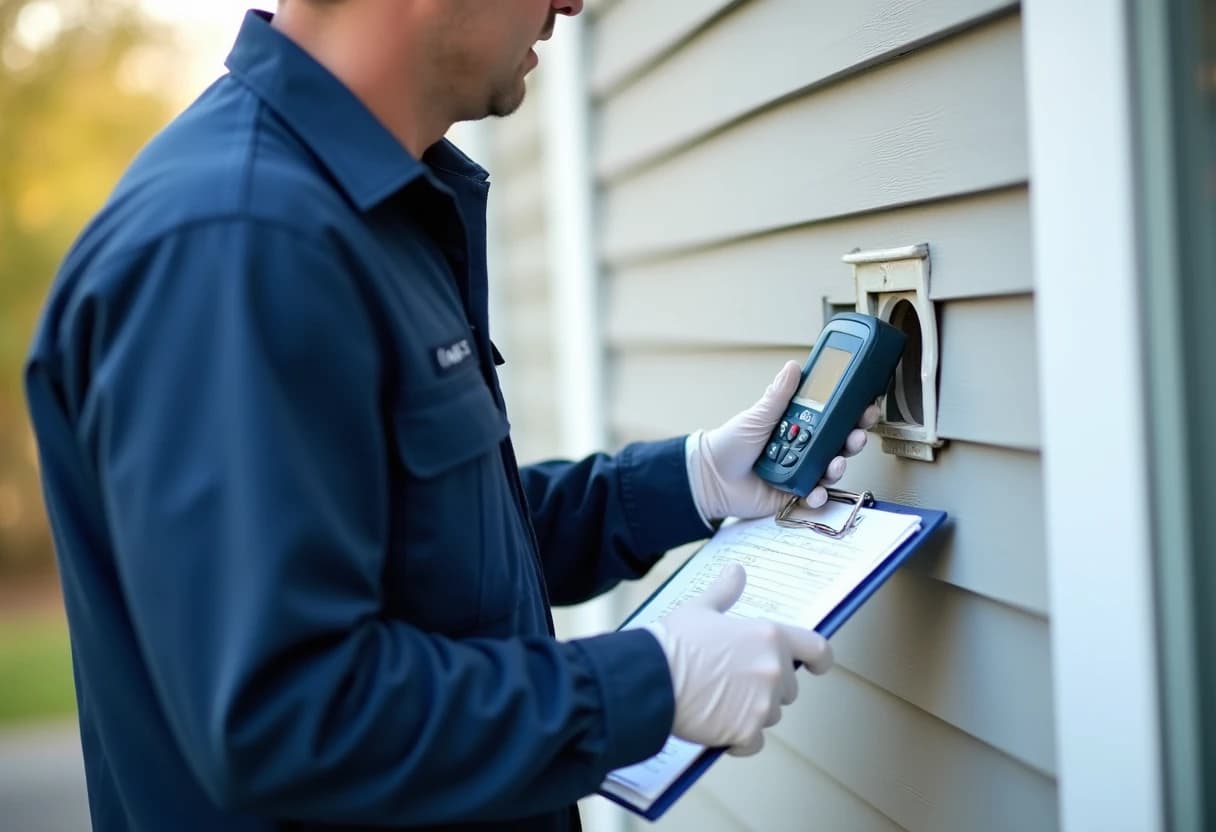
Not every dryer vent needs cleaning every year — but every dryer vent deserves inspecting every year, because the failure modes are silent and the worst-case outcome is a fire. Our Hingham inspection service exists for homeowners who want the truth about their vent without committing to a service they may not need. We measure exhaust airflow, camera the complete duct run, check the termination hood, verify the installation against code, and score the lint load. Roughly a third of the vents we inspect are fine, and we say so in writing. The rest get a documented finding and a flat-rate path to fixing it — your call, no pressure.
Why Dryer Vent Inspection & Safety Check Matters for Hingham Homes
The mechanical case for annual inspection is about heat and moisture, not just fire. A restricted vent forces the dryer to run longer per load, which costs electricity or gas, wears the appliance, and cooks fabrics. It also raises the temperature inside the dryer cabinet, cycling the high-limit thermostat — a safety component designed for occasional intervention, not daily duty — until it fails, which in Massachusetts usually means a repair call in the middle of winter laundry season. Meanwhile, every minute of restricted exhaust pushes warm, moisture-laden air backward through leaks in the duct, and for gas dryers, impedes the removal of combustion byproducts including carbon monoxide. A vent that measures healthy protects the appliance, the utility bill, the indoor air and the house at once. A vent that measures weak announces the problem years before it announces itself — and an annual inspection is the only way anyone ever hears it.
Dryer vents in Hingham have a habit of being longer, older and stranger than the code ever intended. Hingham layers one of New England's finest collections of 17th- and 18th-century homes along Main Street with grand shingle-style houses at Crow Point, postwar capes in South Hingham and luxury condos at the redeveloped Hingham Shipyard. The antique homes typically carry carefully concealed retrofit duct systems with tight, twisting runs, while the Shipyard's newer buildings rely on shared mechanical systems and long dryer vent chases. Laundry areas in these homes were frequently added or relocated decades after construction — into basements, closets and upper floors — which means exhaust runs that snake through joist bays, take extra elbows, and terminate wherever a long-ago installer could reach the outside. Hingham Harbor's salt air is tough on exterior vent hardware, and the town's strict historic-district sensibilities mean many duct retrofits were routed creatively through old framing - creating hidden bends where dust and lint settle. At the Shipyard condos, multi-story dryer vent runs make regular professional cleaning a genuine fire-safety issue. Our inspectors camera these runs weekly across Hingham and know exactly where the local housing stock hides its problems: crushed flex behind stacked units, painted-shut hoods on renovated facades, and transitions that were never brought up to code. The written report tells you what a mirror-and-flashlight check never could.
Our Dryer Vent Inspection & Safety Check Process in Hingham
1Interview & Visual Assessment
First, context: your answers about drying performance and service history frame the inspection, and a walk of the laundry area frames the system. We identify the duct material, count visible elbows, locate where the run enters the structure, and note anything — crushing, kinks, tape-only joints — that already tells part of the story.
2Airflow Measurement at the Termination
The single most telling test takes two minutes: dryer on, anemometer at the hood. Exhaust volume tells us how much of the dryer's rated airflow actually survives the trip through the duct. We record the reading in your report so future inspections can track the trend — a slow year-over-year decline is the earliest possible warning of developing blockage.
3Full-Length Camera Inspection
The camera answers the question the airflow number raises. We feed it the full length of the duct, documenting interior condition foot by foot: where lint is packing, whether joints have pulled apart inside the wall, whether a previous installer used screws or materials the code prohibits. Nothing in the run stays hidden or hypothetical.
4Termination Hood & Damper Check
Outside, we evaluate the termination: does the damper open fully under dryer airflow and close cleanly at rest? Is the hood intact, sealed to the wall, and free of lint beards, paint-overs or screening that traps lint? A surprising share of vent failures live entirely at this last twelve inches of the system.
5Lint-Load Assessment & Fire-Risk Scoring
Combining the camera footage and airflow numbers, we score the system's lint load: how much fuel the duct is carrying and how fast it is accumulating based on household laundry volume. This converts raw findings into a clear risk statement — fine for now, clean this season, or clean immediately — with the evidence attached.
6Code-Compliance Review
Code exists because dryer ducts start fires, so compliance is a safety checklist, not paperwork. The technician verifies duct material and diameter, tallies the equivalent length including elbow penalties, checks joint construction and fastening method, and confirms the termination is damper-equipped and screen-free. Each violation goes in the report with a photo and a recommended fix.
7Written Safety Report & Recommendations
The visit ends with documentation, not a verbal shrug. Your report states plainly whether the vent passed, what was found where, and what — if anything — we recommend, with flat-rate pricing for any corrective work so you can decide on your own schedule. No findings are invented to sell a cleaning; the photos speak for themselves.
Benefits of Professional Dryer Vent Inspection & Safety Check in Hingham
Fire Risk Caught Before It Matters
The roughly 2,900 dryer fires U.S. homes suffer each year share a common history: a restriction that built silently for years. Annual inspection breaks that pattern by catching declining airflow and accumulating lint at the measurement stage — years before the ignition stage. It is the cheapest intervention in fire prevention.
Protection From Moisture & Carbon Monoxide
Every load of laundry evaporates roughly a gallon of water, and all of it must exit through this one duct. Joints that separated inside a ceiling deliver that gallon into your structure instead. The camera pass finds hidden leaks that no exterior symptom would reveal until damage was done.
A Written Report You Can Actually Use
Documentation has quiet value that compounds. After a kitchen fire two streets over, your insurer asks about dryer maintenance — you have a dated report. A buyer's inspector flags the vent — you produce this year's inspection and the issue evaporates. The paper trail costs nothing extra; it comes standard.
Real-Estate & Insurance Documentation
Buyers increasingly ask about dryer vents because their inspectors increasingly flag them. A pre-listing inspection removes the issue from the table before it appears; a pre-purchase inspection prices it before you own it. Agents across Greater Boston refer us for exactly this reason.
Lower Drying Costs & Longer Appliance Life
Dryers fail early for one dominant reason: heat stress from poor exhaust. High-limit switches, thermal fuses and heating elements all die young in restricted systems. An annual inspection keeps the appliance operating within its design envelope, which routinely doubles the useful life of components that cost $150+ per repair visit.
Hidden Code Violations Exposed
Code review matters most at transactions. A non-compliant vent discovered by a buyer's inspector becomes a negotiation weapon; the same finding surfaced by your own inspection becomes a controlled, competitively priced repair. Knowing first is worth far more than the inspection fee.
Signs Your Hingham Home Needs Dryer Vent Inspection & Safety Check
Insurance, Condo or Sale Requirements
Multi-family buildings across Massachusetts are adding periodic dryer vent verification to bylaws after highly publicized lint fires in stacked-laundry buildings. If a notice has landed in your mailbox, we handle single units and whole buildings, with per-unit documentation the board can file.
Recent Renovation, New Dryer or New Home
Renovations disturb dryer ducts constantly — runs get crushed by new framing, terminations get sided or painted over, and 'temporary' flex connections become permanent. If contractors have worked near your laundry area or exterior walls, an inspection verifies the exhaust path survived the project.
You Cannot Remember the Last Service
Dryer vents fail on a schedule set by laundry volume, duct length and installation quality — variables you cannot assess from the laundry room. Annual inspection is the standing recommendation of fire-safety agencies precisely because no visible cue reliably announces when a vent crosses from fine to dangerous.
Burning or Musty Smells During Operation
A hot, singed odor while the dryer runs can mean lint is contacting the heating element or accumulating somewhere hot — the most urgent warning sign a vent can give. Stop using the dryer and book an inspection immediately; this is the symptom that precedes actual ignition events.
The Dryer or Laundry Room Feels Hot
Excess heat and humidity around a running dryer indicate the exhaust system is failing at its one job. Moist air leaking from joints fogs windows and dampens walls; heat backing up trips thermal safeties. Both symptoms show up clearly on an inspection — and both are early warnings worth heeding.
Clothes Take More Than One Cycle
Two cycles to dry a normal load is the classic symptom of a restricted vent. The dryer produces the same heat as always — the moisture simply has nowhere to go, so it recirculates through the drum. An inspection will measure exactly how much airflow the duct is stealing.
Dryer Vent Inspection & Safety Check Cost in Hingham, MA
It helps to price the inspection against what it prevents. A restricted vent adds 20 to 40 minutes to every load; at Massachusetts electricity rates, heavy-laundry households can burn through several hundred dollars a year in wasted drying energy alone — several times the inspection fee. A thermal fuse or high-limit failure from chronic overheating means an appliance repair visit starting around $150 plus parts. A moisture leak inside a wall from a separated joint means drywall, paint and possibly mold remediation. And a lint fire, even a small contained one, means smoke damage, insurance claims and premiums that never quite come back down. Against that menu, $79–$149 once a year with a written report is the least expensive line item in home fire safety. We keep the price deliberately low because inspection is how responsible vent maintenance should start — measurement first, then only the work the measurements justify.
Want the full pricing picture? See our complete Boston-area cost guide or call (617) 390-7145 for an exact flat quote for your Hingham home.
Local Knowledge: Hingham, Plymouth County
Every town's ductwork tells the story of its housing. Hingham layers one of New England's finest collections of 17th- and 18th-century homes along Main Street with grand shingle-style houses at Crow Point, postwar capes in South Hingham and luxury condos at the redeveloped Hingham Shipyard. The antique homes typically carry carefully concealed retrofit duct systems with tight, twisting runs, while the Shipyard's newer buildings rely on shared mechanical systems and long dryer vent chases. Hingham Harbor's salt air is tough on exterior vent hardware, and the town's strict historic-district sensibilities mean many duct retrofits were routed creatively through old framing - creating hidden bends where dust and lint settle. At the Shipyard condos, multi-story dryer vent runs make regular professional cleaning a genuine fire-safety issue. We plan Hingham jobs around those realities, from equipment selection to time on site, and it shows in the results. If you live near Derby Street Shops or anywhere across Hingham's 02043 area, we have almost certainly cleaned a system like yours before — and we can tell you exactly what to expect before we arrive.
The Best Time of Year in Hingham
Fall is dryer vent inspection season in New England for good reason: laundry loads get heavier as the weather cools — jeans, flannels, bedding, towels — exactly when a marginal vent is least able to keep up. NFPA data also shows home dryer fires peak in the colder months, when the appliance works hardest and lint accumulates fastest. An October inspection catches summer's accumulation, verifies the termination damper before snow and ice test it, and sets the system up for the six heaviest laundry months of the year. Book it alongside the furnace tune-up; the two together cover the season's biggest hidden-heat risks in one week.
Why Choose Boston Air Duct Cleaners
Boston Air Duct Cleaners is a local, owner-operated company based at 1121 Washington St in West Newton — not a national franchise dispatching subcontractors. Every crew is our own: background-checked, factory-trained on commercial negative-pressure equipment, and fully insured. We quote flat prices before work begins, document every job with before-and-after photos, and follow NADCA-standard source-removal methods on every system we touch. That is why so much of our work comes from repeat customers, property managers and word-of-mouth referrals across Plymouth County.
Serving Hingham and Surrounding Communities
We serve every community around Hingham as well: Cohasset, Hull, Norwell, Weymouth, Scituate, Braintree all fall inside our regular service routes. If you have a second property, a rental, or family nearby, ask about multi-home scheduling — grouped appointments on the same route are our most requested discount.