
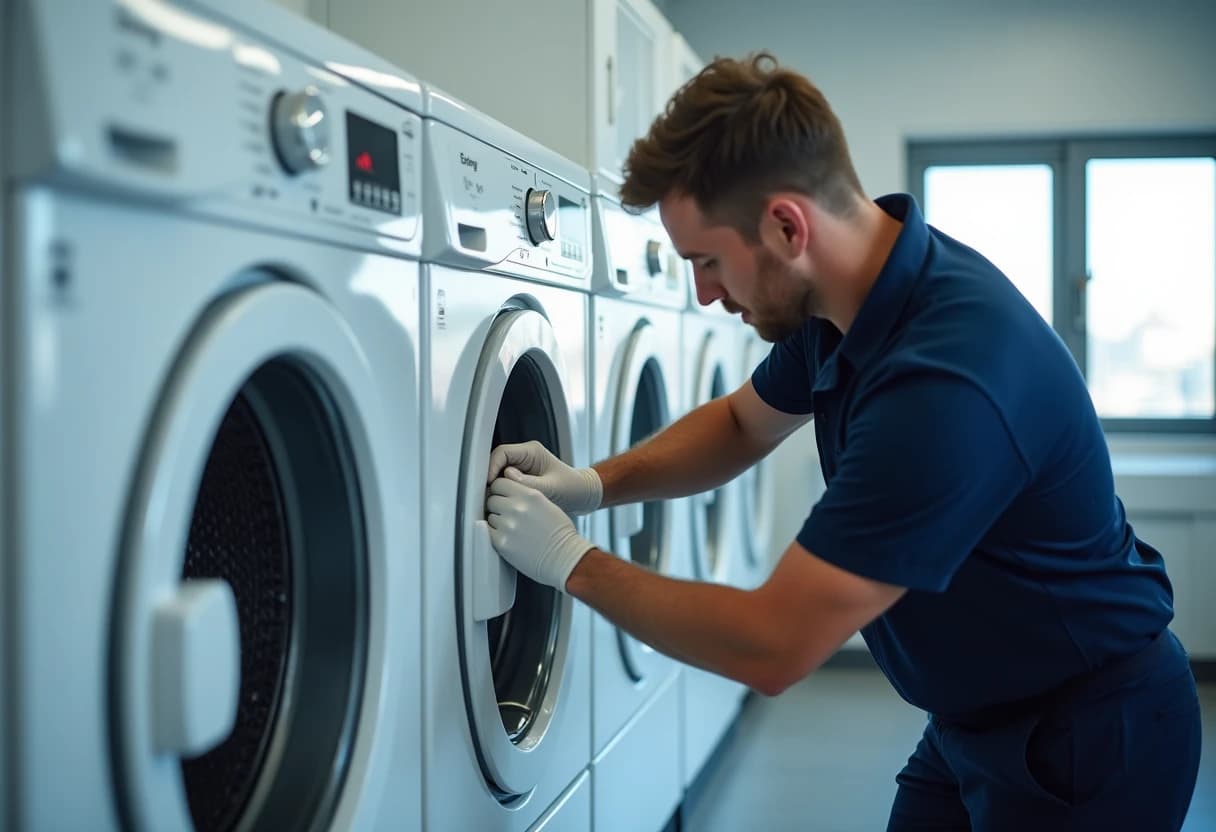
Lint is the most flammable substance most buildings produce daily, and dryer vents concentrate it precisely where heat lives. The National Fire Protection Association's data is blunt: failure to clean is the leading factor in home clothes dryer fires, and multi-family buildings carry the compounded exposure of many dryers behind one set of walls. Our Bridgewater commercial program serves condominiums, apartment buildings, townhome HOAs, senior housing and laundromats with full-building vent cleaning: every run brushed and vacuumed end to end, terminations and dampers cleared and checked, hazardous transition ducts flagged, and airflow measured after cleaning. Boards get one flat proposal, residents get minimal disruption, and everyone gets the report that proves it happened.
Why Commercial & Multi-Unit Dryer Vent Cleaning Matters for Bridgewater Homes
Insurance is increasingly the driver that gets this work scheduled. Master-policy underwriters for condominium associations and apartment owners have tightened attention on dryer venting because the loss data justifies it: lint fires are frequent, preventable and well-documented. Renewal questionnaires now routinely ask when vents were last professionally cleaned; some carriers request the report itself, and after a claim, the absence of maintenance records becomes part of the story an adjuster writes. Massachusetts associations have an added legal dimension — boards carry a duty to maintain common elements, and in many governing documents the vent duct beyond the unit's wall is exactly that. A documented cleaning program is inexpensive armor: dated per-unit reports, condition exceptions logged and disclosed to owners, hazards like prohibited transition ducts flagged in writing, and a recurring schedule that demonstrates ongoing diligence rather than a one-time response. We format our reporting for precisely these audiences — boards, managers, carriers and counsel — because in multi-unit work the paperwork is not an accessory to the service. It is half the service.
From the residential blocks around Central Square to the condo buildings near Bridgewater Town Common, Bridgewater associations share a common blind spot: nobody can name when the building's dryer vents were last cleaned. Bridgewater blends historic Greek Revival and Victorian homes around Central Square and the university with big 1990s-2000s colonial subdivisions carved out of former farmland, plus student-oriented rentals near campus. The rental stock sees hard use and infrequent maintenance, while the newer subdivisions run standard builder-grade duct systems now reaching the twenty-to-thirty-year mark. That means lint accumulating in runs and risers for years across every unit. Bridgewater borders the Hockomock Swamp, and the low water table keeps many basements and crawlspaces damp enough that mold-tinged returns are a recurring find, especially in the Scotland and Titicut sections. Around the university, rental turnovers are the natural moment for a duct cleaning, and we work with several local landlords on that schedule. Because our shop sits 31 miles away in West Newton, Bridgewater buildings get responsive scheduling — walkthroughs within days, whole-building projects completed in one to three days with resident notices handled by our coordinator, and volume per-unit pricing that makes an annual program an easy board approval.
Our Commercial & Multi-Unit Dryer Vent Cleaning Process in Bridgewater
1Building Walkthrough & Per-Unit Proposal
First we learn your building's venting anatomy, because no two multi-unit buildings vent alike. Stacked risers, basement manifolds, improvised renovation-era runs and individual wall vents each demand different equipment and time. The walkthrough maps it, a camera check of representative runs establishes condition honestly, and your written proposal reflects the actual building — not a per-vent teaser that grows on site.
2Resident Coordination & Scheduling
Access is the hard part of multi-unit work, and we manage it for you. Our coordinator provides notice templates for management to distribute, builds a unit-by-unit schedule in efficient sequences, confirms time windows, and tracks completions and no-access units in real time. Buildings typically complete in one to three days, and residents are in their homes for minutes, not hours.
3Dryer-Side Service: Transition Duct & Connection
The first feet of the vent path fail most often: crushed transition hoses behind the dryer, lint packed at the wall connection, and prohibited foil accordion duct that sags into lint-collecting bellies. We service this section in every unit — machine pulled, area vacuumed, transition cleaned or replacement offered, connection remade properly — because a clean wall duct fed through a clogged transition solves nothing.
4Mechanical Cleaning of the Full Vent Run
The in-wall duct is cleaned end to end with rotary brush systems driven through the full run while a high-powered vacuum captures dislodged lint — the same agitation-plus-extraction principle as NADCA duct cleaning, sized for 4-inch dryer duct. Long runs and multiple elbows get repeat passes; the pass is complete when the brush returns clean and airflow verifies.
5Shared Risers, Common Trunks & Booster Fans
Common-element ducts get common-element treatment: documented condition before and after, cleaning with equipment sized for vertical and long-trunk work, and function checks on the mechanical components — booster fans, backdraft dampers, rooftop exhaust terminations — that keep a shared system moving air. For associations, this is the portion of the project that most clearly discharges the board's maintenance duty, and we document it accordingly.
6Termination Service & Exterior Verification
Exterior work is where multi-unit projects earn their price: terminations three stories up that no resident has ever seen, roof caps buried under winter ice damage, wall hoods behind shrubs. Each one is cleared of lint and debris, checked for damper function so it seals when idle and opens fully under flow, and photographed for the report. Damaged or non-compliant caps are flagged with replacement pricing.
7Airflow Verification & Building Compliance Report
The project closes with documentation built for its real audiences. Management receives a unit-by-unit log with service dates and technician notes; the board receives a summary with building-level findings — riser condition, termination issues, prohibited transition ducts by unit — and prioritized recommendations; and the insurance-ready certificate states scope, method and completion date. Next year's cycle is calendared before we leave.
Benefits of Professional Commercial & Multi-Unit Dryer Vent Cleaning in Bridgewater
A Program, Not a Project
One-time cleanings decay; lint production never stops. An annual program keeps every run permanently inside its safe accumulation window, keeps documentation permanently current for insurers, and keeps the cost flat and predictable. Associations that institutionalize it typically spend less per year than their first catch-up cleaning cost — and never face a catch-up again.
Insurance & Liability Documentation That Holds Up
Documentation converts maintenance into protection. The same cleaning, undocumented, protects the building physically but leaves the association exposed on paper. Our reports close that gap: scope, method, dates, per-unit outcomes and photographic evidence, delivered in a format managers file once and retrieve in minutes when the renewal questionnaire arrives.
Directly Reduced Fire Risk, Building-Wide
Fire prevention in shared-wall housing is collective by nature: one blocked vent endangers the neighbors, and no resident can clean the common risers. A coordinated cleaning is the only mechanism that actually resets the whole building's risk — every run, every riser, every termination verified clear on the same dated report.
Longer Dryer Life & Fewer Appliance Failures
In buildings where management owns the machines — common laundry rooms, included-appliance rentals, laundromats — vent restriction is a direct capital cost: premature element, fuse and motor failures across the fleet. Regular vent service is fleet maintenance, and operators who adopt it consistently report fewer service calls and longer replacement cycles.
Shorter Dry Times & Lower Utility Costs
Every minute of extra runtime is heat pushed against a clogged duct: wasted energy, elevated temperatures, and accelerated wear. Post-cleaning, residents notice loads finishing in one cycle again — the most tangible everyday benefit of the program and the one that quiets the steady trickle of 'my dryer is broken' maintenance tickets.
Hazard Discovery Before It Costs You
Every exception we flag is a future incident pre-empted: the crushed run behind a renovated wall, the riser takeoff installed backwards, the termination flap frozen shut that made one unit's dryer exhaust into the building. Boards receive these findings prioritized and priced, converting unknown risks into a manageable repair list.
Signs Your Bridgewater Home Needs Commercial & Multi-Unit Dryer Vent Cleaning
Burning Smells, Hot Laundry Areas or Tripped Thermal Fuses
Laundry rooms that run noticeably hot and humid indicate exhaust air staying in the building — restricted ducts, failed boosters or leaking joints. Beyond discomfort, that moisture feeds mold in shared spaces and the heat stresses every machine in the room. Both symptoms resolve when the common venting actually moves its design airflow.
Insurance Questionnaires or Post-Incident Requirements
Carriers writing habitational risk in Massachusetts have tightened on dryer venting because loss data justifies it. Boards seeing new questionnaire language, inspection requirements or premium credits tied to vent maintenance should read the market signal: this is now standard due diligence for multi-unit buildings, and the documented program is what compliance looks like.
No One Can Say When Vents Were Last Cleaned
New management contracts and board turnovers routinely surface this gap: dryer vents appear in no budget, no vendor list and no maintenance log. It is among the first items worth correcting, because it combines genuine fire risk with an insurer-facing documentation hole — and because the first cleaning doubles as a building-wide inspection.
Foil Accordion Ducts or Improvised Vent Runs in Units
Walk any older building's units and you will find them: shiny foil accordion transitions sagging behind dryers, trapping lint in every corrugation. Manufacturers prohibit them and the IRC's requirements for smooth-interior duct exist because they burn. Each one found is a unit-level hazard flag — and a building-wide survey usually finds many.
Dryers Taking Two or More Cycles Per Load
The test is simple: a healthy dryer with clear venting dries a standard load in one cycle. Track your building's work orders — clusters of slow-dry, no-heat and thermal-fuse tickets are the venting system asking for service, and each ticket represents a unit running its dryer at elevated temperature against a restricted duct.
High-Duty Operations: Laundromats & Common Laundry Rooms
Watch the operational metrics: creeping gas consumption per load, customer complaints about damp clothes, machines cycling on high-limit switches. Each is restricted exhaust translated into operating cost. Duty-matched vent cleaning restores throughput and typically pays for itself in energy and uptime before its fire-safety value is even priced in.
Commercial & Multi-Unit Dryer Vent Cleaning Cost in Bridgewater, MA
Multi-unit dryer vent cleaning in Greater Boston is priced per building, and the per-unit economics are the story: while a single-home service runs $150–$250, coordinated building projects typically price between $40 and $90 per unit depending on scale and complexity, with whole-building totals commonly landing between $300 for a small multi-family and $3,000 or more for larger properties. The honest drivers are unit count (bigger buildings earn lower per-unit rates), vent configuration (short individual wall runs price lowest; long improvised runs and shared vertical risers add equipment and time), termination access (ground-floor wall caps versus roof work or lift access), and machine handling (pulling and resetting each dryer versus laundry-room fleets). Shared risers, common trunks and booster fans are itemized separately as common-element service. Every proposal is flat and written after a walkthrough — the board approves a number, not an estimate.
Want the full pricing picture? See our complete Boston-area cost guide or call (617) 390-7145 for an exact flat quote for your Bridgewater home.
Local Knowledge: Bridgewater, Plymouth County
Every town's ductwork tells the story of its housing. Bridgewater blends historic Greek Revival and Victorian homes around Central Square and the university with big 1990s-2000s colonial subdivisions carved out of former farmland, plus student-oriented rentals near campus. The rental stock sees hard use and infrequent maintenance, while the newer subdivisions run standard builder-grade duct systems now reaching the twenty-to-thirty-year mark. Bridgewater borders the Hockomock Swamp, and the low water table keeps many basements and crawlspaces damp enough that mold-tinged returns are a recurring find, especially in the Scotland and Titicut sections. Around the university, rental turnovers are the natural moment for a duct cleaning, and we work with several local landlords on that schedule. We plan Bridgewater jobs around those realities, from equipment selection to time on site, and it shows in the results. If you live near War Memorial Park or anywhere across Bridgewater's 02324 area, we have almost certainly cleaned a system like yours before — and we can tell you exactly what to expect before we arrive.
The Best Time of Year in Bridgewater
Budget season is the other calendar that matters. Condo boards and HOAs typically set budgets in fall for January fiscal years, and management companies batch portfolio maintenance into spring and fall windows — so the associations that get the best scheduling are the ones whose proposals are in hand before the budget meeting, not after the insurance renewal letter. Our walkthroughs and written building proposals are free and typically delivered within a week, which makes September the ideal month to price a program for board approval, October through November the prime execution window, and spring the natural slot for portfolio managers batching multiple properties. Insurance renewal dates deserve the same planning: a completed compliance report dated before the questionnaire arrives reads as a program; one dated after reads as a scramble. We calendar program buildings so the report always predates the renewal.
Why Choose Boston Air Duct Cleaners
We built this company around the jobs other duct cleaners do badly: the 130-year-old Victorian with panned-joist returns, the Bridgewater condo with a 60-foot dryer run to the roof, the post-renovation house full of drywall dust. Our crews see Greater Boston's hardest systems every week, and the experience shows in the details — floor protection on the way in, sealed registers during the work, HEPA-vacuumed work areas on the way out, and imagery that proves the ducts are actually clean. Call (617) 390-7145 and judge the difference from the first conversation.
Serving Bridgewater and Surrounding Communities
Beyond Bridgewater, our crews cover the surrounding communities daily — including East Bridgewater, Brockton, Easton, Whitman, Hanson. Because routes cluster geographically, booking alongside a neighboring appointment often unlocks same-day service and combined-visit savings. Wherever you are in Plymouth County, the same flat-rate pricing, insured technicians and photo-documented process applies.