
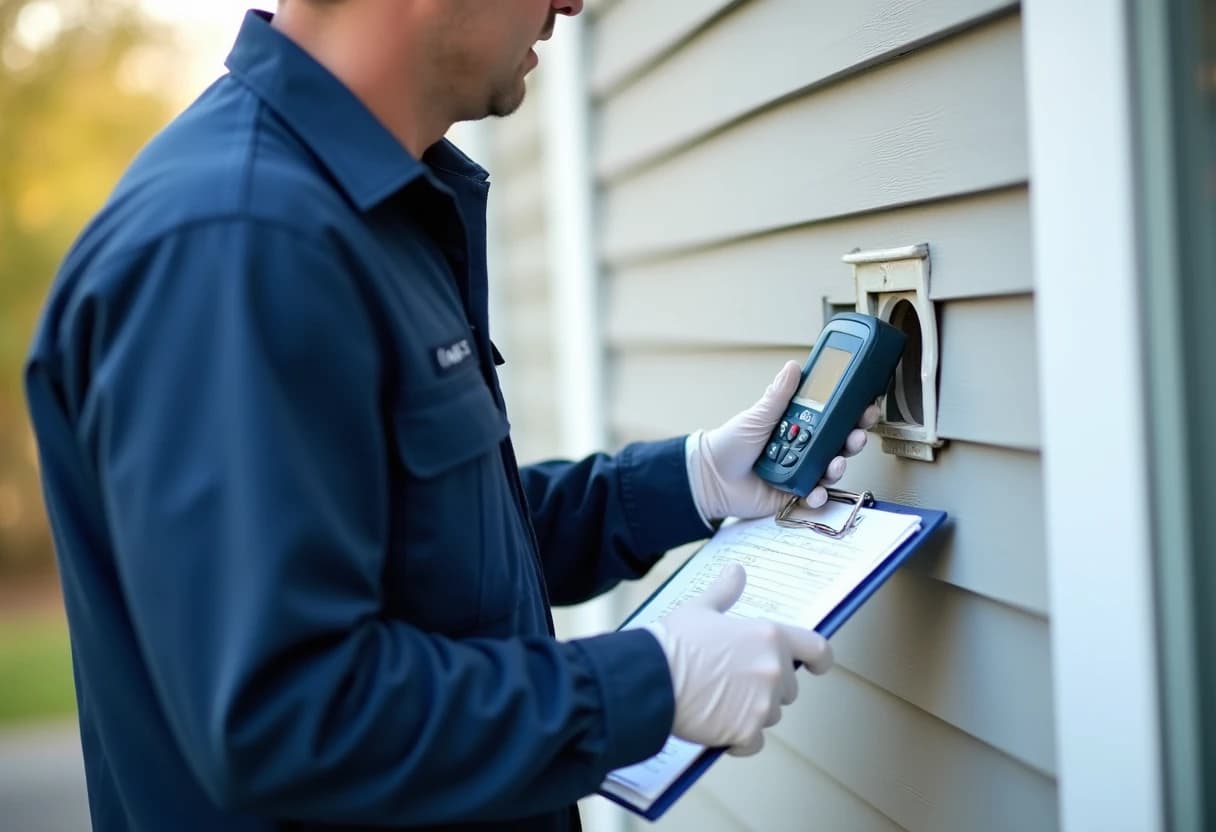
Your dryer cannot tell you when its vent is half-blocked — it just runs longer, hotter and closer to the edge. By the time clothes need two cycles, the duct is often carrying a serious lint load and the high-limit safety switch is doing regular overtime. A professional inspection catches the problem while it is still just an airflow number. In Beacon Hill, our technicians combine instrument measurements with a full camera pass of the duct, so the assessment is objective: cubic feet per minute at the hood, percent restriction visible in the run, condition of every joint and elbow. You get facts, photos and a recommendation — never a scare pitch.
Why Dryer Vent Inspection & Safety Check Matters for Beacon Hill Homes
Homeowners reliably maintain what they can see and neglect what they cannot, and the dryer duct is the definition of cannot-see: it disappears behind the dryer into a wall and emerges somewhere outside, sometimes two or three stories up. Between those points, anything may be happening — lint packing at a crushed elbow, a joint pulled apart inside a ceiling and quietly venting moist air into the framing, a bird nest behind the hood, a plastic flex duct a previous owner installed decades before it was understood to be a fire hazard. An inspection replaces assumption with evidence. Our process is instrument-first: an anemometer reading at the termination establishes whether the system moves the volume of air a dryer needs, and the camera pass explains any shortfall. The findings frequently surprise owners — long-time residents discover terminations that have been painted shut, and new buyers discover the sellers' 'recently cleaned' vent was never touched. Either way, you finally know.
Buying or selling in Beacon Hill? The dryer vent is the gap in almost every home inspection. Beacon Hill's Federal and Greek Revival rowhouses date to the early 1800s, making them some of the oldest continuously occupied homes we service anywhere. Behind the brick facades and original shutters, owners have shoehorned modern HVAC into buildings that predate central heating entirely - slim-duct systems in closets, air handlers in former servant stairs, and condensers hidden on rear decks to satisfy the historic commission. Nearly every duct run here is a custom retrofit with tight bends that collect dust aggressively. General inspectors note the dryer's presence and move on; they do not camera the duct, measure the exhaust, or verify the hidden run complies with code — yet vent condition is a genuine safety and cost item, especially in older properties near Louisburg Square where laundry was retrofitted long after construction. Two-hundred-year-old plaster, horsehair insulation and crumbling brick party walls shed fine mineral dust that ends up circulating through Beacon Hill's retrofit duct systems. Exterior work requires Beacon Hill Architectural Commission approval, so dryer vents and exhaust terminations are often routed to rear elevations through long concealed runs - exactly the kind of vent that quietly packs with lint. We clean these buildings with the care their age demands. We provide pre-listing and pre-purchase dryer vent inspections across Suffolk County with fast written reports that slot straight into a disclosure package or an inspection-response negotiation. Sellers use them to remove doubt; buyers use them to avoid inheriting someone else's fire risk.
Our Dryer Vent Inspection & Safety Check Process in Beacon Hill
1Interview & Visual Assessment
We start by listening: how long do loads take, has anything changed, when was the vent last cleaned, any moisture or odor issues? Then the technician examines the laundry area — dryer position, transition duct type and condition, visible connections — because the interview and the first look often predict exactly what the instruments will find.
2Airflow Measurement at the Termination
The single most telling test takes two minutes: dryer on, anemometer at the hood. Exhaust volume tells us how much of the dryer's rated airflow actually survives the trip through the duct. We record the reading in your report so future inspections can track the trend — a slow year-over-year decline is the earliest possible warning of developing blockage.
3Full-Length Camera Inspection
The camera answers the question the airflow number raises. We feed it the full length of the duct, documenting interior condition foot by foot: where lint is packing, whether joints have pulled apart inside the wall, whether a previous installer used screws or materials the code prohibits. Nothing in the run stays hidden or hypothetical.
4Termination Hood & Damper Check
The exterior hood gets a hands-on inspection — flap movement, spring tension, seal condition, evidence of pest entry, and clearance from grade and snow lines. New England weather is hard on terminations; corroded hinges and stuck dampers are among our most common findings, and both restrict airflow as effectively as a clogged duct.
5Lint-Load Assessment & Fire-Risk Scoring
Not all lint findings are equal. A light, even film is normal; wet, matted accumulation at a low point signals condensation problems; heavy packing at elbows signals a duct working beyond its geometry. We grade what the camera found against how your household uses the dryer, so the recommendation matches your actual risk.
6Code-Compliance Review
We review the installation against the residential mechanical code for dryer exhaust: smooth rigid metal duct (not foil or plastic flex in concealed runs), a maximum of 35 feet equivalent length with deductions for each elbow, no screws penetrating the airstream, proper termination with a backdraft damper and no screen. Violations are photographed and explained.
7Written Safety Report & Recommendations
Everything we measured and saw goes into a written safety report delivered the same day. Pass or fail, you have proof of the vent's condition — the document buyers ask for, insurers accept and associations require. If work is warranted, the report doubles as a precise scope, so any quote you gather is comparing the same job.
Benefits of Professional Dryer Vent Inspection & Safety Check in Beacon Hill
Lower Drying Costs & Longer Appliance Life
Dryers fail early for one dominant reason: heat stress from poor exhaust. High-limit switches, thermal fuses and heating elements all die young in restricted systems. An annual inspection keeps the appliance operating within its design envelope, which routinely doubles the useful life of components that cost $150+ per repair visit.
A Written Report You Can Actually Use
The report is the product: dated, photographed, measured. Homeowners file it with insurance records, sellers attach it to disclosures, landlords and condo boards accept it as compliance documentation, and buyers use it to negotiate or verify. A verbal 'looks fine' from a handyman does none of those jobs.
No Unnecessary Cleanings
The $79 inspection frequently saves the $200 cleaning. When airflow measures strong and the camera shows light accumulation, we say so in writing and leave. Customers who used to buy blind annual cleanings routinely discover their actual interval is longer — and their total maintenance spend drops accordingly.
Real-Estate & Insurance Documentation
Buyers increasingly ask about dryer vents because their inspectors increasingly flag them. A pre-listing inspection removes the issue from the table before it appears; a pre-purchase inspection prices it before you own it. Agents across Greater Boston refer us for exactly this reason.
Hidden Code Violations Exposed
Many chronic lint problems are really installation problems: the duct violates length, material or fastening rules and will clog on schedule forever until corrected. The compliance review identifies the root cause, so you can stop paying to clean a duct that was built to fail.
Protection From Moisture & Carbon Monoxide
A leaking or restricted dryer duct pushes warm, saturated air into wall cavities and framing — a slow moisture problem that shows up later as mold, peeling paint or rot. For gas dryers, exhaust integrity also governs the removal of combustion byproducts, including carbon monoxide. Inspection verifies both.
Signs Your Beacon Hill Home Needs Dryer Vent Inspection & Safety Check
Burning or Musty Smells During Operation
A hot, singed odor while the dryer runs can mean lint is contacting the heating element or accumulating somewhere hot — the most urgent warning sign a vent can give. Stop using the dryer and book an inspection immediately; this is the symptom that precedes actual ignition events.
No Visible Exhaust at the Outside Hood
Lint visibly beard-ing around the exterior hood, a damper wedged with debris, or a termination that was painted or caulked over during exterior work — all common findings, all easily missed from ground level, and all fully documented during the exterior portion of our inspection.
The Dryer or Laundry Room Feels Hot
Modern dryers protect themselves from restricted vents by cycling their high-limit switch — you experience this as a hot machine, lukewarm loads and mysteriously long cycles. The safety is working, but it was not designed for daily duty. An inspection identifies the restriction before the safety component fails.
Recent Renovation, New Dryer or New Home
Renovations disturb dryer ducts constantly — runs get crushed by new framing, terminations get sided or painted over, and 'temporary' flex connections become permanent. If contractors have worked near your laundry area or exterior walls, an inspection verifies the exhaust path survived the project.
Clothes Take More Than One Cycle
Drying time is the vent's report card. Loads that once took 45 minutes now taking 80 means delivered airflow has fallen substantially — and every extra minute is money and heat stress. If your laundry routine has quietly stretched over the past year, the duct is asking for an inspection.
You Cannot Remember the Last Service
Dryer vents fail on a schedule set by laundry volume, duct length and installation quality — variables you cannot assess from the laundry room. Annual inspection is the standing recommendation of fire-safety agencies precisely because no visible cue reliably announces when a vent crosses from fine to dangerous.
Dryer Vent Inspection & Safety Check Cost in Beacon Hill, MA
For real-estate and compliance uses, pricing stays in the same $79–$149 band with a few specifics. Pre-listing and pre-purchase inspections cost the same as annual ones and include transaction-ready documentation — dated report, photographs, airflow figures and code notes formatted for disclosure packages or inspection responses; rush scheduling for pending closings is usually possible within 48 hours. Condo associations and landlords booking multiple units in one visit receive per-unit pricing that steps down meaningfully with volume — a full triple-decker or small building costs far less per unit than three separate appointments. Annual-plan customers who book recurring inspections lock the current rate and receive reminder scheduling. If the inspection finds work: cleaning typically runs $129–$249 depending on the run, repairs are quoted flat from the camera findings, and nothing proceeds without your written approval. The inspection stands alone; everything beyond it is your decision made with the evidence in hand.
Want the full pricing picture? See our complete Boston-area cost guide or call (617) 390-7145 for an exact flat quote for your Beacon Hill home.
Local Knowledge: Beacon Hill, Suffolk County
What makes Beacon Hill different? Beacon Hill's Federal and Greek Revival rowhouses date to the early 1800s, making them some of the oldest continuously occupied homes we service anywhere. Behind the brick facades and original shutters, owners have shoehorned modern HVAC into buildings that predate central heating entirely - slim-duct systems in closets, air handlers in former servant stairs, and condensers hidden on rear decks to satisfy the historic commission. Nearly every duct run here is a custom retrofit with tight bends that collect dust aggressively. Two-hundred-year-old plaster, horsehair insulation and crumbling brick party walls shed fine mineral dust that ends up circulating through Beacon Hill's retrofit duct systems. Exterior work requires Beacon Hill Architectural Commission approval, so dryer vents and exhaust terminations are often routed to rear elevations through long concealed runs - exactly the kind of vent that quietly packs with lint. We clean these buildings with the care their age demands. For duct and dryer vent systems, those local factors translate into specific, predictable problems — and predictable problems are the ones we solve fastest. Call (617) 390-7145, tell us your street and home style, and we will quote the job accurately the first time, usually in under five minutes.
The Best Time of Year in Beacon Hill
Humid Boston summers change what we find inside dryer ducts. Moisture-laden ambient air combines with exhaust condensation in long or cool runs — basement ducts especially — and lint that would stay loose and fluffy in dry conditions mats into dense, damp accumulations that restrict flow and occasionally host mold. Coastal and near-coastal homes add salt air to the equation, which corrodes hoods, hinge pins and damper springs measurably faster than inland exposure. A summer inspection catches both patterns, and it is also the easiest season to schedule: our calendar is lightest between June and August, which makes it the smart pick for annual-plan customers.
Why Choose Boston Air Duct Cleaners
Boston Air Duct Cleaners is a local, owner-operated company based at 1121 Washington St in West Newton — not a national franchise dispatching subcontractors. Every crew is our own: background-checked, factory-trained on commercial negative-pressure equipment, and fully insured. We quote flat prices before work begins, document every job with before-and-after photos, and follow NADCA-standard source-removal methods on every system we touch. That is why so much of our work comes from repeat customers, property managers and word-of-mouth referrals across Suffolk County.
Serving Beacon Hill and Surrounding Communities
We serve every community around Beacon Hill as well: Back Bay, Boston, Charlestown, Cambridge, South End, Somerville all fall inside our regular service routes. If you have a second property, a rental, or family nearby, ask about multi-home scheduling — grouped appointments on the same route are our most requested discount.